
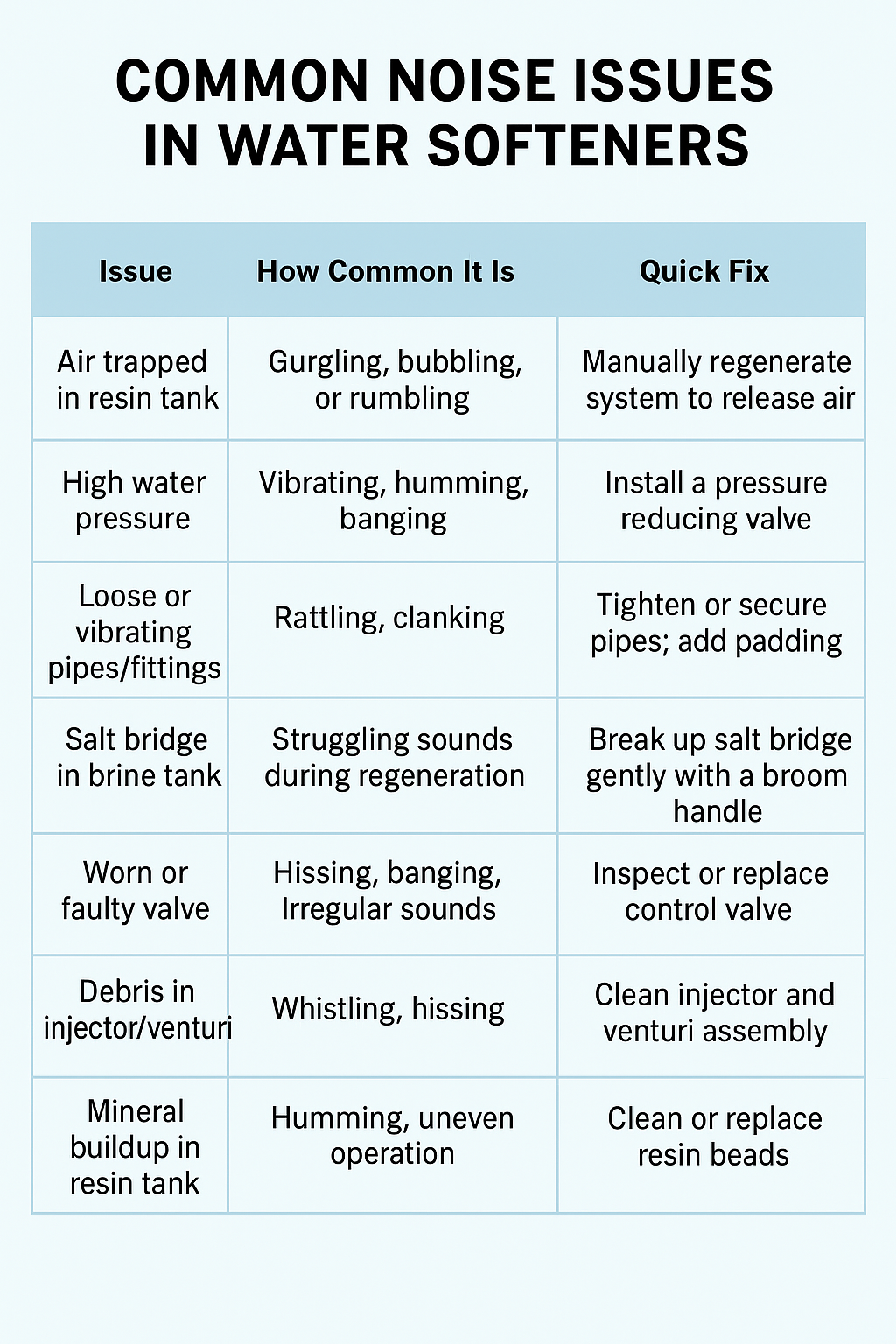
Is your water softener making a loud noise? The loud noise usually comes from the system’s regeneration cycle, when it’s flushing and refilling the tank. The key is to locate where the sound is coming from — whether it’s loose fittings, hard water buildup in the valve, or the drain line rattling against a wall — and secure or clean those components.
Here are some common causes and potential solutions:
4. Loose parts
5. Salt bridges
WaterSmart has been serving the Waterloo Region for almost 30 years. For the best water softener installation and service around, contact WaterSmart today.
Is Your Water Softener Making a Loud Noise? - 9 Reasons Why
1. Regeneration Cycle
If your water softener is making a loud noise during this cycle, it’s normal and usually not a cause for concern.
Water softeners often go through a regeneration cycle where they flush out the accumulated minerals (usually during the night).
During this process, you may hear noises like clunking, clicking, or gurgling.
Watch this video to learn more about the water softener regeneration cycle.
2. Air in the Resin Tank
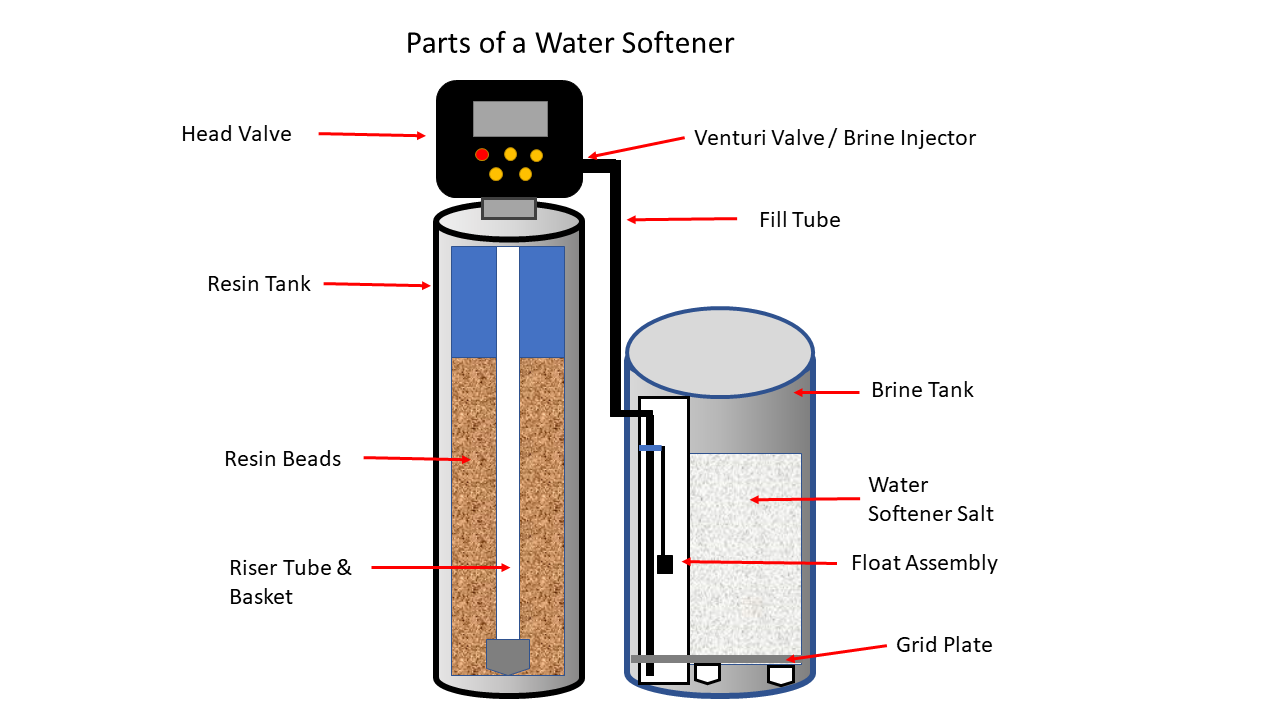
If your water softener is making gurgling or banging sounds, air trapped in the resin tank is often the culprit. Try manually regenerating the system — this flushes out trapped air bubbles and can instantly quiet things down.
Sometimes, air can get trapped in the resin tank, causing noises when water flows through it.
The resin tank, also known as a resin bed or resin tank container, is a critical component of a water softener system.
It plays a central role in the ion exchange process that removes hardness minerals (usually calcium and magnesium) from the water, thereby "softening" it.
3. High Water Pressure
Check your home’s water pressure — anything above 80 psi can make your softener rumble or vibrate. If it’s too high, install a pressure-reducing valve to protect both your water softener and your entire plumbing system from damage and noise.
Installing a pressure-reducing valve may help. Check out the video below to learn more.
Excessively high water pressure can put stress on the water softener's components, leading to vibrations and noise.
We’ve talked about low water pressure in the past, but high water pressure in your plumbing system can have various causes.
It's essential to address it because excessively high water pressure can lead to damage to your plumbing fixtures, appliances, and pipes.
4. Loose Parts
Is your water softener making a loud noise? Maybe this is because something has come loose. By systematically checking and securing its components, you can eliminate noise caused by loose parts.
If your water softener is making loud noises due to loose parts, here’s how to address it:
Brine Tank Lid: Check if the lid on the brine tank is not securely in place. A loose lid can vibrate during operation, creating noise. Adjust or tighten it as needed.
Bypass Valve: Ensure the bypass valve is tightly secured. If it’s loose, it can rattle as water flows through the system. Tighten any screws or connections.
Resin Tank: Inspect the resin tank for any movement. If the tank isn’t firmly seated or its connections are loose, it might shift or rattle. Secure the tank in place or tighten its fittings.
Brackets and Screws: Examine all screws and brackets that hold the softener in place. Over time, these can loosen due to vibrations. Tighten them with a wrench or screwdriver.
5. Salt Bridges

If your water softener is loud or struggling during regeneration, inspect the brine tank for a salt bridge — a hardened layer of salt that prevents proper dissolving. This can put stress on the system and reduce its effectiveness.
Gently break up the salt bridge with a broom handle to restore normal function and quiet operation.
Regularly checking the brine tank helps prevent hard water issues and keeps your softener running smoothly.
6. Resin Bed Issues
If the resin bed becomes damaged or clogged with debris, it can impede the softening process and create noise. You may need to replace the resin bed or clean it, depending on the severity of the issue.
The resin bed is a crucial component of a water softener because it is responsible for the actual water softening process.
The size and quality of the resin bed can affect the efficiency and capacity of the water softener.
Over time, the resin bed may become exhausted or fouled, requiring maintenance or replacement to ensure the water softener continues to function effectively.
7. Motor or Timer Problems
The motor and timer in your water softener can be common sources of noise if they develop issues. Addressing these components can often resolve noise and keep your water softener running quietly.
Motor Problems: If the motor is making a humming or grinding sound, it could be worn out or struggling to operate. Inspect the motor for visible wear or damage and ensure it’s properly secured. If faulty, replace it with a compatible model.
Timer Issues: A noisy or malfunctioning timer might click or buzz excessively if it’s worn or improperly aligned. Check for damage or misalignment, and replace the timer if necessary to restore smooth operation.
Above is an example of a water softener motor replacement.
8. Sediment Buildup
Sediment buildup in your water softener can cause noise and disrupt its operation. Regular cleaning and maintenance are essential to minimize sediment-related issues and ensure smooth operation.
Resin Tank: Sediment accumulating in the resin tank can lead to rattling or clogging noises. Regularly flush the tank to remove debris and keep it clean.
Brine Line or Valve: Sediment in the brine line or valves can restrict water flow, creating unusual sounds. Disconnect and clean these components to clear any buildup.
Routine Maintenance: Periodically clean the entire system, including the sediment filter if your setup has one, to prevent further accumulation and noise.
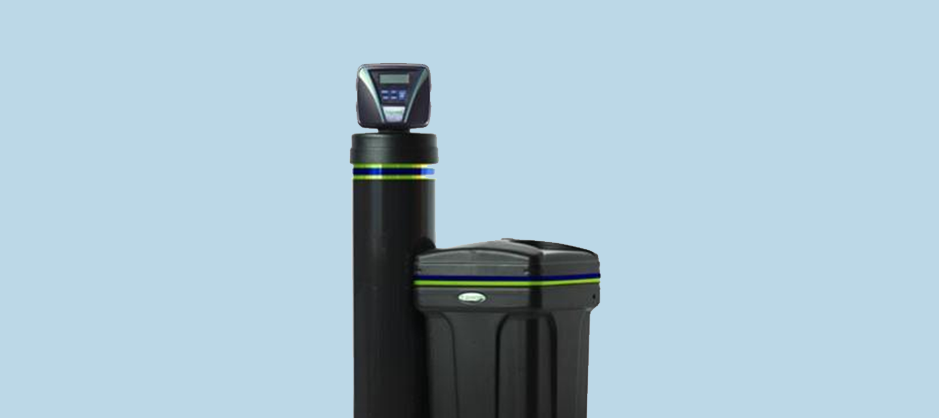
Contact a professional if your water softener is making loud noises.
9. Poor installation
If the water softener was not installed correctly, it may not function properly, leading to noise.
Make sure it's installed according to the manufacturer's instructions.
At WaterSmart, not only do we sell the best water softeners in the business, but we also do water softener installations. Our factory-trained technicians can expertly set up and install any water softener.
Installation is always free when you purchase a new water softener from WaterSmart.
If you want to make the move to better, softer water, contact WaterSmart today to book an appointment and have one of our Water Softener installation experts do it for you.
If you're not comfortable troubleshooting or fixing these issues on your own, it's best to contact a professional plumber or water softener technician to diagnose and repair the problem.
Regular maintenance and proper installation can go a long way in preventing noise and ensuring your water softener operates efficiently.

Is your water softener making loud noise? We can help!
If you need water softener installation, repair or maintenance in the Kitchener-Waterloo region, you can trust WaterSmart. We'd be happy to help at a reasonable rate.
Our expert, experienced plumbers will install your new water softener efficiently and at a price that you can afford.
If you purchase a water softener from us, your installation is free!
Contact WaterSmart today for a free quote.
Customer Testimonials
“Friendly, knowledgeable sales staff. Fast diagnosis of our water softener problem. Efficient installation within a week at a reasonable price. We feel good about this purchase.”