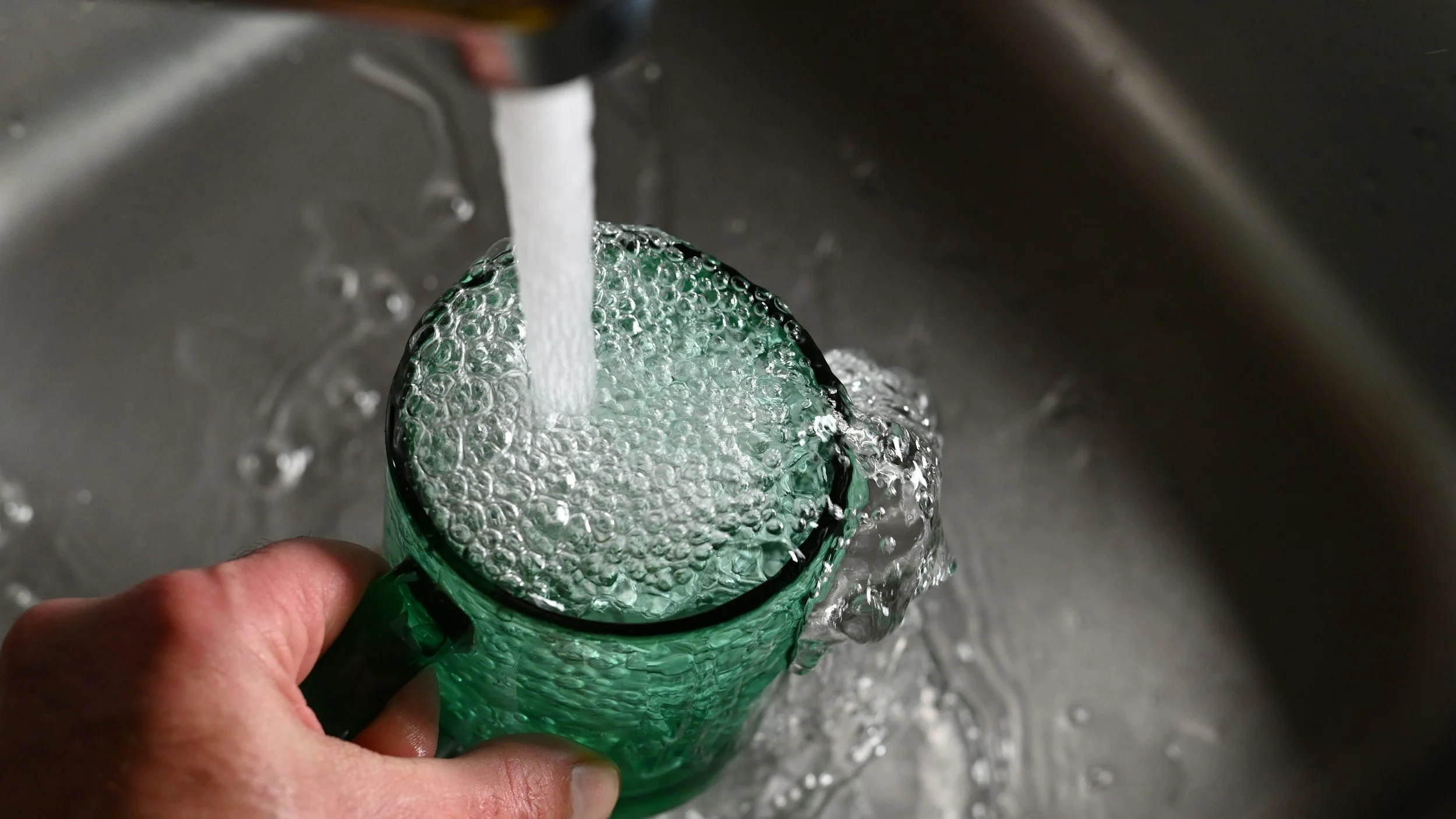
Water might look crystal clear coming out of the faucet, but invisible minerals, chemicals, and dissolved solids can quietly impact everything from the taste of your morning coffee to the lifespan of your water heater. Running a simple water quality test at home is one of the easiest ways to monitor what is flowing through your pipes.
WaterSmart offers comprehensive water testing, purification, and treatment services tailored to your specific supply line. Contact us today for a free water test and for our home water expertise.
Key Takeaways:
Quick & Accessible: Multi-parameter test strips (like Varify kits available on Amazon) allow homeowners to test for up to 17 parameters in under two minutes without lab equipment.
Driven by Colorimetry: Test strips use chemical indicators that react with target compounds, shifting color depending on exact concentration levels.
Appliance Protection: Testing different water outlets helps protect sensitive appliances—like coffee makers, washing machines, and hot water heaters—from destructive scale accumulation.
Professional Treatment: Home test strips are a great diagnostic starting point; complex issues like severe hard water or iron staining often require whole-home filtration or softening systems from experts like WaterSmart.
1. Why Run a Home Water Quality Test?
Whether your home receives municipal city water or private well water, water composition constantly fluctuates. Seasonal runoff, aging distribution pipes, and localized mineral deposits all affect your water supply.
Performing a routine water quality test helps you catch potential issues early, including:
Excessive Hardness: High levels of dissolved calcium and magnesium that cause white scale build-up on fixtures and lower detergent efficiency.
Unbalanced pH: Water that is too acidic (pH below 6.5) can corrode copper pipes, while water that is too alkaline (pH above 8.5) leaves mineral crusts.
Residual Chlorine & Chloramines: Disinfectants used by municipal plants that affect taste, odour, and skin health.
Nitrates & Nitrites: Runoff contaminants particularly dangerous for infants and pets, most common in well water near agricultural zones.
2. The Science Behind At-Home Test Strips
Home testing kits - such as those produced by Varify - rely on a proven analytical technique called colorimetry (determining chemical concentration based on color changes).
Each tiny pad on a test strip is impregnated with specific chemical reagents designed to react exclusively with target ion species:
pH Pad: Uses a blend of pH indicator dyes (like bromothymol blue and phenol red) that change color predictably as hydrogen ion concentration varies.
Hardness Pad: Contains a chelating agent (a chemical compound that binds to metal ions) along with a dye indicator. When calcium and magnesium bind to the reagent, the pad shifts from blue (soft) to deep red/purple (hard).
Free Chlorine Pad: Uses DPD (N,N-diethyl-p-phenylenediamine), an organic compound that oxidizes instantly upon contact with free chlorine, turning shades of magenta depending on parts-per-million (ppm) levels.
Because these reactions occur almost instantaneously upon exposure to water, test strips deliver accurate quantitative ranges without requiring specialized lab equipment.
3. Step-by-Step Walkthrough: How to Test Your Water
Testing your home's water quality takes less than two minutes. You will need a reliable multi-parameter kit (such as a Varify 17-in-1 test kit available on Amazon), a clean glass, and fresh tap water.
How to Complete Your Home Water Test
Follow these 5 simple steps to get an accurate reading in under 2 minutes.
Collect Fresh Sample Water
Run 5-10 secRinse a clean glass with tap water, then fill it halfway. Let the faucet run briefly first so you test fresh water directly from the supply line rather than standing pipe water.
Dip the Strip
2 secondsTake one test strip from the bottle and immediately reseal the cap. Submerge all reagent pads completely in your water sample for 2 seconds with a gentle motion.
Shake Off Excess Liquid
InstantRemove the strip from the glass and gently shake off excess water once. Hold the strip horizontally so chemicals don't bleed across adjacent reagent pads.
Wait for Chemical Reaction
Wait 60 secHold the strip flat and undisturbed while the colorimetric reagents react. Allow the pads to stabilize for 60 seconds before reading the results.
Compare Color Results
Match SwatchesAlign the test strip against the color chart on your bottle under good light. Match each pad to its closest color swatch to read your water parameters.
Once your test strip has sat for the full 60 seconds, match each reagent pad to the reference chart below to read your exact water parameters.
7-in-1 Water Quality Test Strip Reference Chart
Compare your test strip pads to the color swatches below within 60 seconds of dipping.
| Parameter | Ideal Range | Concentration Levels & Color Indicators | |||||
|---|---|---|---|---|---|---|---|
| Total Hardness (ppm / mg/L) | 0 – 50 ppm | 0 Soft |
25 Soft |
50 Mod. Hard |
120 Hard |
250 Very Hard |
425+ Extreme |
| Free Chlorine (ppm) | 1 – 3 ppm | 0 | 0.5 | 1.0 | 3.0 | 5.0 | 10.0 |
| Total Chlorine (ppm) | 1 – 3 ppm | 0 | 1.0 | 3.0 | 5.0 | 10.0 | 20.0 |
| Bromine (ppm) | 2 – 4 ppm | 0 | 1.0 | 2.0 | 4.0 | 6.0 | 10.0 |
| Total Alkalinity (ppm) | 80 – 120 ppm | 0 | 40 | 80 | 120 | 180 | 240 |
| pH (pH scale) | 7.2 – 7.6 | 6.2 | 6.8 | 7.2 | 7.6 | 8.0 | 8.4 |
| Cyanuric Acid (ppm) | 30 – 50 ppm | 0 | 30 | 50 | 100 | 150 | 240 |
4. Testing Specific Household Outlets & Appliances
Don't stop at the kitchen sink - water characteristics can vary across different fixtures depending on home plumbing, hot water tanks, and inline filters.
Shower & Bathroom Outlets
Why Test: Elevated chlorine and hard water stripped of natural moisture can cause dry skin, brittle hair, and soap scum buildup on glass doors.
What to Look For: Free chlorine levels higher than 1.0 ppm and total hardness above 120 ppm indicate that a dedicated shower filter or whole-home softener would improve shower comfort.
Coffee Maker & Kettle Tap Water
Why Test: Specialty coffee extraction relies heavily on mineral balance. According to the Specialty Coffee Association (SCA), ideal brewing water requires around 68–150 ppm total hardness and a neutral pH (~7.0).
What to Look For: Water that is too hard causes rapid scale accumulation inside internal heating coils, while overly soft or acidic water leads to sour, flat extraction.
Clothes Washing Machine
Why Test: Hard water reduces the cleaning power of laundry detergents, requiring up to 30% more soap per load and causing fabrics to feel stiff over time.
What to Look For: If total hardness reads high, switching to liquid detergents or adding a softening treatment protects fabrics and prolongs washing machine pump life.
Outdoor Hose & Garden Spigots
Why Test: Garden soil pH and plant nutrient uptake are directly impacted by outdoor irrigation water.
What to Look For: Highly alkaline hose water (pH > 8.0) can gradually raise garden soil pH, inhibiting micronutrient absorption in sensitive plants like hydrangeas, blueberries, and tomatoes.
5. Taking the Next Step: Professional Water Treatment
While DIY test strips are an excellent, low-cost diagnostic tool for quick home checks, they only reveal what is in your water - they can’t fix it.
If your at-home water test flags elevated hardness levels, chemical imbalances, or lingering odour issues, taking the next step with professional water treatment turns those raw numbers into a tailored, long-term solution.
Complex challenges like severe mineral scale, iron rust staining, rotten-egg sulphur odours, or invisible micro-contaminants require equipment engineered specifically for your home's unique flow rate and supply line.
Partnering with local water softener experts like WaterSmart ensures your water isn't just tested, but comprehensively analyzed. From commercial-grade water softeners to high-efficiency reverse osmosis (RO) drinking systems, professional installation guarantees clean, balanced water across every tap - protecting your family’s health, your plumbing, and your household appliances for years to come.
Take the Guesswork Out of Your Home’s Water
Testing your water is the first step - fixing it is where we come in. Whether you need a whole-home water softener to protect your appliances or a reverse osmosis system for crisp, clean drinking water, WaterSmart has you covered.
Get in touch with our team today to explore custom water treatment solutions tailored to your household.
“Wonderful team, know what they are doing. They don’t try to sell you things you don’t need. Enjoyed to work with the team and the softener itself works perfectly well.”