Whether you are making your morning coffee, running a load of laundry, or drawing a glass of water from the tap, your water quality impacts your entire household routine. Because our local municipal supply has a highly unique geological footprint, scheduling professional water quality testing Kitchener or Waterloo services is essential for uncovering exactly what is hidden in your home's pipes.
This comprehensive guide breaks down our regional water profile and details how a targeted evaluation can help you choose the right filtration strategy.
Visit WaterSmart today to get Free Water Quality Testing In-Store!
Key Takeaways
Extreme Hardness: Kitchener-Waterloo has some of the hardest municipal water in Canada (20–34+ grains per gallon), requiring dedicated softening to protect plumbing and appliances.
Chlorine & Taste: Local tap water is safe but heavily treated with chlorine to maintain disinfection across a massive groundwater pipe network, altering taste and smell.
Testing Clarifies Solutions: Comprehensive water quality testing identifies specific issues, showing exactly whether you need a softener, reverse osmosis (RO), or carbon filtration.
Actionable Next Step: WaterSmart offers free, comprehensive, in-home water analysis to map your home's treatment path.
1. The Unique Reality of Waterloo Region Tap Water
If you pour a glass of municipal tap water anywhere in the Kitchener-Waterloo region, you are drinking water with a completely different geological history than Toronto or Hamilton.
While those cities draw surface water from Lake Ontario, roughly 80% of our local tap water originates deep underground in pristine, glacial aquifer beds. The remaining 20% is drawn from the Grand River and processed at the advanced Mannheim Water Treatment Plant.
By exploring the exact mineral and chemical composition of this unique municipal supply, you can stop guessing and start taking control of your home’s environmental health. While groundwater is naturally protected from many surface contaminants, its long journey through subterranean limestone, dolomite, and gravel beds leaves behind an incredibly dense mineral footprint.
This makes local tap water structurally unique, safe to drink, but exceptionally taxing on your household plumbing, skin, and appliances. Understanding your water profile through a professional water test in Waterloo or Kitchener is the crucial first step toward protecting your home investments.

2. The Big Two Local Water Problems: Hardness & Chlorine
When evaluating local municipal water, homeowners generally face two distinct profiles: heavy mineral scale and aesthetic treatment traits.
Liquid Rock: The Extreme Hardness Profile
Water hardness is defined by the concentration of dissolved calcium and magnesium ions. Across Canada, water measuring over 10.5 grains per gallon (gpg) is classified as "very hard."
In Kitchener-Waterloo, municipal water levels regularly measure between 20 to 34+ grains per gallon. This puts local water off the traditional charts, classifying it as "extremely hard."
This high mineral content causes rapid calcium carbonate precipitation whenever water is heated. The consequences are immediately visible: crusty white buildup on faucets, chalky film on shower glass, spotted dishes, and chronically dry, irritated skin or dull hair.
Behind the scenes, it forms an insulating blanket of stone inside your water heater, drastically dropping its efficiency and shortening its lifespan.
Chemical Disinfection: The Residual Chlorine Issue
Because the Region of Waterloo maintains thousands of kilometers of distribution pipe networks, municipal water treatment facilities must add chlorine to ensure the water remains microbiologically sterile all the way to your tap.
While absolutely vital for public health, residual chlorine leaves a sharp, swimming-pool-like chemical taste and odor in your drinking water, and it can dry out skin and deteriorate rubber seals inside plumbing fixtures over time.
3. What Does a Local Water Quality Test Measure?
A professional, localized water analysis bypasses guesswork. When conducting water quality testing in Kitchener-Waterloo homes, specialists focus heavily on a set of core parameters to pinpoint the precise mineral load and chemical presence in your specific plumbing line.
| Water Parameter | Typical KW Range | What It Means for Your Household |
|---|---|---|
| Hardness (Calcium/Magnesium) | 20 – 34+ gpg | Determines the exact capacity setting and salt consumption curve required for a water softener. |
| Total Chlorine | 0.5 – 2.0 mg/L | Indicates the presence of taste/odor causing disinfectants; dictates the need for carbon filtration. |
| Total Dissolved Solids (TDS) | 400 – 700+ ppm | Measures the total combined mobile content of all inorganic substances dissolved in the water. High TDS alters drinking flavour. |
| Iron & Manganese | Trace (Municipal) | Can cause severe red/brown or black staining on porcelain and laundry, even in minute amounts. |
| pH Level | 7.2 – 7.8 (Balanced) | Ensures the water is not acidic, which would cause premature pinhole leaks and copper pipe corrosion. |
4. Interpreting Results: Finding Your Perfect System Match
A water quality test provides a clear diagnostic roadmap. The specific numbers on your test report will map directly to one or more specialized water treatment systems.
High Hardness (10+ gpg) -> Ion-Exchange Water Softener
If your test confirms anything above 10 grains of hardness (which is virtually every home in Kitchener-Waterloo), a high-efficiency Water Softener is a baseline necessity. These systems utilize food-grade resin beads coated in sodium ions.
As hard water passes through, the resin acts like a magnet, trapping the heavy calcium and magnesium ions and releasing a microscopic, harmless amount of sodium. This completely eliminates scale buildup, slashes soap usage by up to 50%, and keeps your water heater running at peak efficiency.
High TDS & Chemical Taste -> Reverse Osmosis (RO) System
While a water softener removes the heavy structural minerals, it does not purify your drinking water of dissolved solids, chlorine, or microscopic impurities. If your test demonstrates a high TDS (Total Dissolved Solids) count, a Reverse Osmosis System installed under your kitchen sink is the ultimate remedy. By pushing water through a semi-permeable membrane, it strips away up to 99% of all dissolved substances, providing bottled-quality water straight from a dedicated designer faucet.
High Chlorine Odor -> Whole-Home Carbon Filtration
If you are happy with your drinking water but dislike showering in chlorinated water or noticed your clothes fading quickly in the wash, a Whole-Home Carbon Filter is the answer. Installed at the point where water enters your house, it treats every single drop by absorbing chlorine, volatile organic compounds (VOCs), and general municipal odor before the water flows into your plumbing lines.
Take Control of Your Home's Water Quality Today
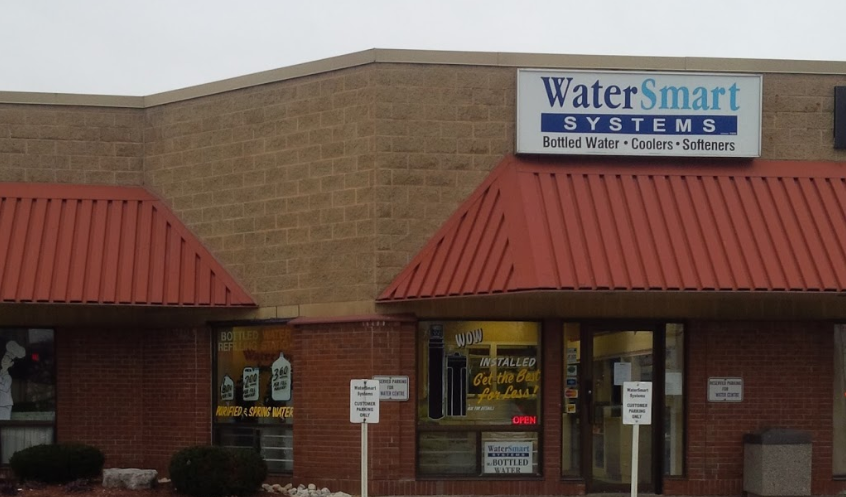
Stop guessing what's flowing through your pipes. The team at WaterSmart Systems & Plumbing has been servicing Kitchener, Waterloo, Cambridge, and the surrounding areas since 1994. We understand local groundwater profiles better than anyone else.
Contact us today to book your free, no-obligation, in-home water quality test. Let our local experts test your water parameters right in front of you and recommend the ideal, budget-friendly solution tailored exactly to your household needs.
“Matt was very professional and provided all the options. He was very knowledgeable and did a great job installing our new water softener.”