Water Softener

How Long Does Water Softener System Installation Take? Costs, Steps & Tips

Dealing with stubborn limescale on your fixtures or "spotty" dishes after a wash? Investing in a water softener system installation is the most effective way to eliminate hard water problems, protecting your home’s plumbing and extending the life of your appliances.

While the prospect of cutting into your main water line can feel daunting, the installation process is a well-refined science that typically takes less than a single afternoon. From the moment the technician arrives to the first time you turn on a faucet and feel the difference, the transition to soft water is surprisingly swift.

In this guide, we will break down exactly how long the installation takes, what the process looks like step-by-step, and the current 2026 costs you should anticipate.

  1. Average Installation Timeline

  2. Step-by-Step Installation Process

  3. Factors Affecting Installation Time

  4. 2026 Cost Breakdown

  5. Preparation Tips for Homeowners

  6. Benefits of Professional Water Softener System Installation

Whether you are replacing an aging unit or installing a system in a brand-new home, this walkthrough will prepare you for a seamless installation day. Contact us to book your installation today.


Key Takeaways

  • Speed: Most standard professional installations are completed in a 2 to 4-hour window.

  • Infrastructure: Homes with a "softener loop" (pre-plumbed) enjoy the fastest and cheapest installations.

  • Hardness Levels: Knowing your water’s GPG (Grains Per Gallon) is the most critical factor for system calibration.

  • Compliance: Professional installers ensure the system meets local plumbing codes and environmental drainage regulations.

1. Average Installation Timeline

While the physical labour of connecting pipes is the primary focus, the "clock" for a water softener system installation begins the moment the technician arrives and ends only after a successful test cycle.

  • Initial Assessment (30–60 Minutes): This isn't just a walkthrough. The installer must locate the main water shut-off, identify the nearest drain and power source, and perform a final water test. Even if you've had your water tested before, a professional will verify the hardness level on-site to ensure the system is programmed accurately from minute one.

  • Plumbing & Hardware Setup (1.5–2.5 Hours): This is the "heavy lifting" phase. It involves cutting the main water line, installing the bypass valve, and routing the drain lines. If your home requires a new electrical outlet or a new drain line to be plumbed through a wall, this phase will lean toward the 2.5-hour mark.

  • Programming & Commissioning (30–60 Minutes): Once the unit is physically connected, it must be "brought to life." This involves filling the brine tank, setting the internal clock, inputting the hardness data, and running a manual "recharge" cycle to check for leaks under pressure.

By understanding these phases, homeowners can better plan their day around the temporary water shut-off required for the install.


2. Step-by-Step Installation Process

  1. Site Prep & Water Testing: The technician tests your water’s hardness in Grains Per Gallon and iron content. This ensures the resin bed is sized correctly for your specific needs.

  2. The Water Shut-Off: The main water valve is closed, and the lowest faucets in the house are opened to drain the remaining water from the pipes.

  3. Cutting the Main Line: The installer cuts into the cold water line after it enters the home, but before it splits to the water heater. This ensures both your hot and cold water (except for outdoor hoses, usually) are softened.

  4. Installing the Bypass Valve: This is a crucial three-way valve that allows you to "bypass" the softener for tasks like watering the lawn or if the unit ever needs repair.

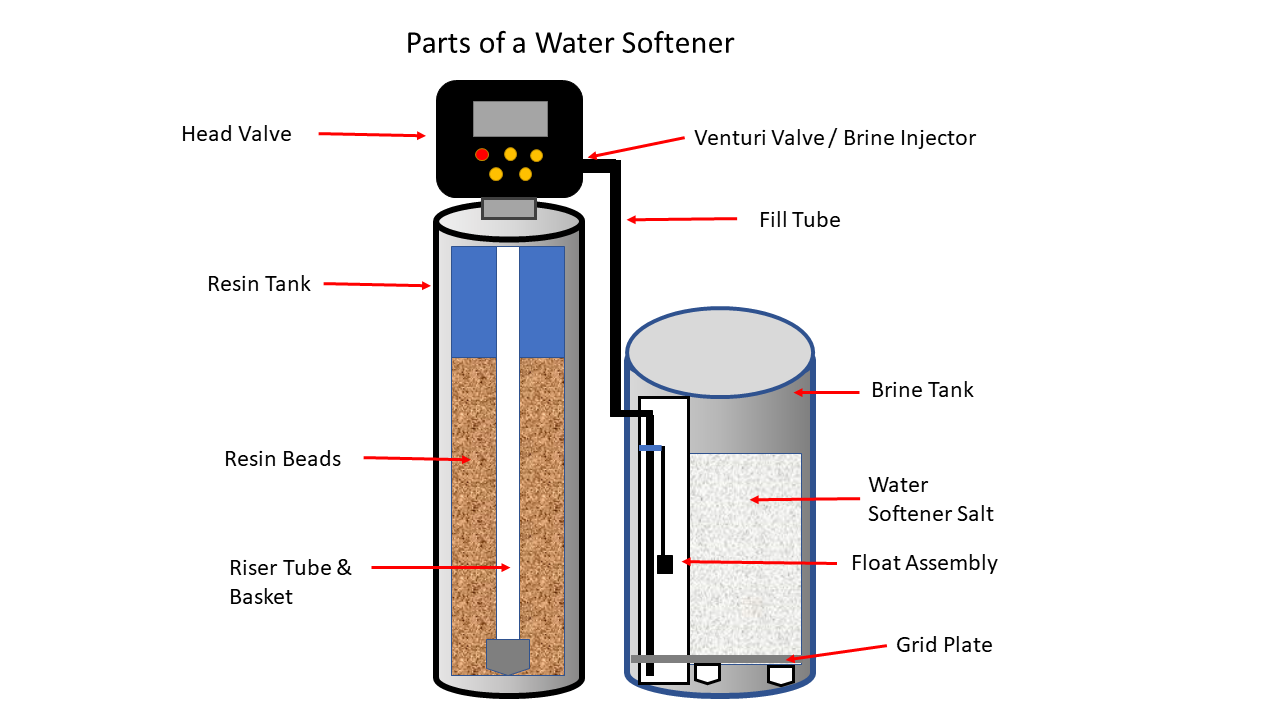
  5. Connecting the Tanks: The resin tank (the tall one) and the brine tank (the salt tank) are positioned. The plumbing is connected to the "In" and "Out" ports of the control valve.

  6. Drain & Overflow Lines: A discharge hose is run from the softener to a floor drain or utility sink. A second "overflow" line is often attached to the brine tank as a safety measure.

  7. System Start-up: The technician adds 1–2 bags of salt, adds a specific amount of water to the brine tank, and starts a manual regeneration cycle. This flushes out any "fines" (tiny resin beads) or debris from the installation process.

Each of these steps is vital to ensure that your system operates efficiently without wasting salt or water.

3. Factors Affecting Installation Time

Not every home is built the same, and these variables can significantly alter the labour involved:

  • Pipe Material: Soldering copper pipes takes significantly more time and precision than using "push-to-connect" fittings or PEX crimping. If you have older galvanized steel pipes, the process may involve threading or specialized adapters.

  • Drain Access: The system needs to discharge saltwater every few days. If there isn't a floor drain or standpipe within 10–15 feet, the installer may need to pump the discharge upward or through an exterior wall.

  • Power Availability: Modern softeners need an outlet to run the digital timer and motorized valve. If an outlet isn't within reach, an electrician may be needed, or the plumber will need to run an extension or new line.

  • System Complexity: A simple salt-based softener is straightforward. However, if you are installing a multi-stage system that includes a sediment pre-filter, a carbon filter, and a UV purifier, the plumbing becomes much more intricate.

Homeowners should expect a longer installation day if their plumbing is older or if the unit is being placed in a difficult-to-reach location.

4. 2026 Cost Breakdown

The following table reflects the current 2026 market rates for equipment and professional labour.

System Type Unit Cost Labor & Materials Estimated Total
Single-Tank Ion Exchange $600 – $1,200 $500 – $800 $1,100 – $2,000
Dual-Tank (High Demand) $1,500 – $2,500 $700 – $1,200 $2,200 – $3,700
Salt-Free Conditioner $800 – $1,800 $600 – $900 $1,400 – $2,700
Whole-Home RO System $4,000 – $8,000 $1,500 – $3,000 $5,500 – $11,000

5. Preparation Tips for Homeowners

To keep labour costs down and the process moving quickly, take these steps before the pro arrives:

  • Clear a Path: Move boxes, storage, or laundry piles away from the water main and the area where the tanks will sit (approx. a 3ft x 4ft space).

  • Locate Your Main Shut-off: If your main valve is old or "frozen," the plumber will need to know this immediately, as it may need replacement before the softener can be installed.

  • Check Your Salt: Most installers do not carry 40lb bags of salt in their vans. Have 200lbs of high-purity pellet salt on hand for the initial fill.

  • Verify the Drain: Ensure your floor drain is not blocked by debris. The softener will discharge several gallons of water at a high flow rate during its first cycle.

Proper preparation can shave up to an hour off the total installation time and prevent "surprise" labour charges.

6. Benefits of Professional Installation

While a "handy" homeowner can technically install a softener, a professional ensures long-term peace of mind.

Plumbers understand the Air Gap requirements - a critical safety gap between the drain line and the sewer to prevent raw sewage from ever siphoning back into your drinking water.

Furthermore, a professional can properly "size" the unit. An oversized unit wastes salt, while an undersized unit will wear out prematurely and leave you with hard water during high-usage times (like when running the shower and dishwasher simultaneously).

Most professional installs also come with a 1-year labour warranty, protecting your investment from leaks or programming errors.


Export, Local Water Softener System Installation

At WaterSmart Systems & Plumbing, our licensed technicians have decades of experience servicing and installing all types of water softeners.

Whether it’s a quick repair, annual inspection, or complete system upgrade, we’re here to help you protect your investment and enjoy reliably soft water year-round.

We proudly install high-performance, Canadian-made 10% resin water softeners designed to give you cleaner, softer water with less hassle, year after year.

And remember, installation is always free with the purchase of any WaterSmart water softener. In addition, we install our Smart Series water softeners a little differently than the conventional softener to make it more water-efficient.

Contact us today for a free water test or to learn more about the benefits of upgrading to 10% resin.


We wanted a reverse osmosis system and to own our water softener. We called Watersmart. A salesperson named Paul came to our house. Told us it would be no problem to install. Told me the cost and put no sales pressure or long diatribes on me. I learned to find out Paul is the owner. We booked an install for a Monday 9:00am. 9:00am Monday Ethan showed up to install water softener 10 minutes later Scott arrived to install RO System. Both very professional and knowledgeable. 1 hour 45 minutes later install complete and no mess. I highly recommend this company.
— Steve Meikle
 

DIY Plumbing Upgrades That Pair Perfectly with a Water Softener

You pour a glass of crystal-clear water from your tap. It tastes fine. It looks clean. But what if that clear water is hiding invisible threats that could be impacting your health and your home?

The truth is, even in areas with rigorously tested municipal water, contaminants can sneak in. We’re talking about more than just the occasional boil advisory—we’re talking about persistent, unseen particles and chemicals like microplastics, heavy metals, and bacteria that evade the eye and linger in your home's system.

  1. The Invisible Threats Lurking in Your Water

  2. Water Quality Concerns: The Ontario Connection

  3. Your Actionable Solutions

  4. FAQ: Your Water Safety Questions Answered

WaterSmart Systems has been serving the Waterloo Region for over 30 years, and the focus is always on clean, safe, great-tasting water backed by exceptional service.

Contact us today for all your home water solutions.


Key Takeaways

  • Invisible Threats Exist: Even clear, municipal water may contain contaminants like Microplastics, Lead, Arsenic, and Disinfection Byproducts (THMs) that pose long-term health risks.

  • The Major Ontario Risk: Lead leaching from old plumbing is a primary concern for homeowners in older communities across the province. Private wells are completely unregulated and must be tested by the owner.

  • Testing is Essential: You cannot detect these contaminants by sight or smell; professional water testing is the only way to confirm what is in your home's water.

  • RO is Gold Standard: Reverse Osmosis (RO) systems are the most effective solution for removing the widest range of invisible contaminants, including heavy metals and microplastics, from your drinking water.

  • Protect Your Whole Home: A Whole Home Carbon Filter is recommended to reduce exposure to chlorine and chemical contaminants during bathing and showering.

1. The Invisible Threats Lurking in Your Water

Microscopic invaders into your home’s water system come from a mix of sources, including aging infrastructure, industrial runoff, and even the simple act of flushing drugs down the drain. Their health impacts are often chronic, building up over the years.

1. Microplastics: Tiny Pollutants, Big Problem

These are fragments of plastic less than 5mm in length, and they are everywhere - including your drinking water.

  • The Source: Plastic debris breaks down in the environment, and particles can enter water sources from wastewater treatment systems. Some studies have found microplastics in drinking water, though concentrations vary widely (WHO, 2019).

  • The Health Impact: While the World Health Organization currently considers the risk from ingested microplastics to be low based on available data, the long-term effects of ingesting the smallest particles (nanoplastics) and the chemicals they carry are still being studied. Experts note potential concerns like oxidative stress, endocrine disruption, and inflammation from the additives and other pollutants that adhere to the plastic surface (NIH/PMC, 2022).

2. Heavy Metals: The Silent System Destroyers

Heavy metals like Lead and Arsenic are among the most dangerous chronic contaminants.

  • The Source: Lead most often leaches into water from corroding lead service lines and old household plumbing, which is a major concern in older Canadian cities. Arsenic can be naturally occurring in groundwater or a result of industrial waste.

  • The Health Impact (Citing CDC/Health Canada):

    • Lead: Even low levels can cause neurological damage, developmental delays, and reduced IQ in children. In adults, it's linked to cardiovascular and kidney issues.

    • Arsenic: A known human carcinogen associated with increased risk of skin, lung, and bladder cancer.

3. Bacteria and Disinfection Byproducts

While water is treated to kill microbes, the process itself can sometimes create new issues, and distribution systems can introduce new bacteria.

  • The Source: Total Coliform and E. coli can indicate a breach in the water treatment or distribution system, often from runoff or a well being affected by human/animal waste. Municipal water is disinfected (usually with chlorine), but this forms Disinfection Byproducts (DBPs), such as Trihalomethanes (THMs).

  • The Health Impact:

    • Bacteria (e.g., E. coli): Immediate acute effects like severe gastrointestinal illness.

    • DBPs (THMs): Long-term exposure is linked to a possible increased risk of liver damage and cancer (Ontario Drinking Water Quality Standards).

2. Water Quality Concerns: The Ontario Connection

For homeowners in Ontario, understanding local risks is essential. While municipal water is subject to strict testing under the Ontario Drinking Water Quality Standards (ODWS), specific regional and local factors still pose risks:

  • Lead Piping: Older city homes, particularly in the GTA and other historic communities, are at risk of lead contamination from aging service lines and plumbing. While testing is mandatory in schools and childcare centres, homeowners must be proactive.

  • Private Wells: Over 1 million Ontarians rely on private well water, which is not regulated by the ODWS. These systems are highly susceptible to contamination from agricultural runoff (nitrates/pesticides) and naturally occurring elements (radon, uranium, arsenic).

  • Emerging Contaminants (PFAS): Chemicals like Per- and Polyfluoroalkyl Substances (PFAS), used in many consumer and industrial products, have been detected in the Great Lakes basin. While levels are often below Canadian guidelines, they are monitored closely due to potential links to cancer and decreased vaccine response in children.

3. Your Actionable Solution: WaterSmart Products

The best way to protect your family and your home is to install a certified water filtration system.

WaterSmart offers advanced, Canadian-tested solutions designed to tackle the contaminants most relevant to Ontario homes.

WaterSmart Solution Contaminants Treated Benefits for Health & Home
Reverse Osmosis (RO) Systems Heavy Metals (Lead, Arsenic), Microplastics, Nitrates, THMs, Cysts/Bacteria
  • Health: Delivers ultra-pure water for drinking and cooking.
  • Home: Prevents scale buildup in kettles/ice makers.
Whole Home Carbon Filters Chlorine, THMs, VOCs (Volatile Organic Compounds), Pesticides
  • Health: Reduces chemical exposure from all water (showers, bath, drinking).
  • Home: Extends the life of appliances and improves water taste/odor.
UV Water Purifiers Viruses and Bacteria (E. coli, Giardia, Cryptosporidium)
  • Health: A critical, chemical-free final barrier against microbial contamination, especially for private well owners.
  • Home: Low maintenance and highly effective.

4. FAQ: Your Water Safety Questions Answered

Is my tap water safe to drink in Ontario?

While municipal tap water is generally safe and regularly tested according to the Ontario Drinking Water Quality Standards (ODWS), contaminants can still be present due to factors like aging plumbing (lead pipes) or temporary breaches in the system. If you rely on private well water, it is not regulated by the government, and you must test it annually yourself.

How do I know if I have invisible contaminants in my water?

Invisible contaminants like lead, microplastics, arsenic, and bacteria have no taste, smell, or colour. The only way to know for sure is to have your water professionally tested by an accredited laboratory. Bring a water sample to us, and we will test it on the spot.

What is the best way to remove microplastics from my drinking water?

Advanced filtration systems, such as Reverse Osmosis (RO), are highly effective at removing extremely fine particles, including microplastics. Activated carbon filters and ultrafiltration can also significantly reduce their presence.

Should I use a Point-of-Use or a Whole Home water filter?

  • Point-of-Use (e.g., RO system at the kitchen sink): Ideal for purifying water used specifically for drinking and cooking.

  • Whole Home (Point-of-Entry): Recommended for treating all water entering your home, which reduces exposure to chlorine, disinfection byproducts, and chemicals during showering, laundry, and bathing. For comprehensive protection, installing both is often recommended.


Worried About Your Home Water? We’re Here For You.

If you’re ready to enjoy cleaner, softer water and reliable local service, our team is here for you.

Whether you’re installing a new system, upgrading an older unit, or simply looking for expert advice, we’ll guide you to the right solutions other local families trust for long-term results.

Thank you for choosing WaterSmart. We look forward to providing your household with the same care, attention, and quality we’d give our own families.


I would wholeheartedly recommend this company to everyone and anyone. They have saved us so much money and been so fair and honest that I only wish they also did water heaters because we want to replace that equipment too.
— E Gracic
 

How to Maintain Your Water Softener for Maximum Efficiency

A water softener is a smart investment in your home’s plumbing, appliance longevity, and water quality. But like any system, it needs regular upkeep to keep working effectively.

This guide walks you through essential maintenance tips to keep your water softener running at peak performance.

  1. Why Water Softener Maintenance Matters

  2. Check Your Salt Levels Regularly

  3. Use the Right Type of Salt

  4. Break Up Salt Bridges

  5. Clean the Brine Tank

  6. Inspect the Resin Bed

  7. Watch for Signs of Trouble

WaterSmart can help if you need expert advice or a professional tune-up - contact us today.


1. Why Water Softener Maintenance Matters

Routine water softener maintenance ensures your system is doing its job: removing excess minerals like calcium and magnesium that cause hard water.

A well-maintained softener can:

  • Prevent scale buildup in pipes, fixtures, and appliances

  • Improve the performance of dishwashers, washing machines, and water heaters

  • Reduce soap scum and spotting on dishes and glassware

  • Improve soap and detergent effectiveness, saving you money

  • Extend the overall lifespan of the softener unit

Without proper upkeep, your system may become inefficient, use more salt and water, or even break down prematurely.

A few simple monthly tasks can help you avoid costly repairs and keep your water consistently soft.

2. Check Your Salt Levels Regularly

Salt is the lifeblood of your water softener. It’s used during the regeneration cycle to clean the resin beads that remove hardness minerals from your water.

If salt levels drop too low, the system can’t regenerate properly, leading to hard water in your home.

Here's how to stay on top of it:

  • Open the brine tank lid and visually inspect the salt level once a month

  • Refill when the salt drops below half full

  • Aim to keep salt about 3 to 4 inches above the water level

  • Be cautious not to overfill, as this can cause salt bridging (more on that below)

You can also mark a recurring reminder in your calendar or phone so you never forget this quick but crucial step.

3. Use the Right Type of Salt

The type of salt you use directly affects your softener’s performance. Choosing the right one reduces maintenance needs and improves efficiency.

Recommended:

  • Evaporated Salt Pellets: These are highly purified and dissolve well, minimizing residue and buildup

  • Solar Salt: A more natural option that works well in areas with lower water hardness

Avoid:

  • Rock Salt: Although cheaper, it contains more impurities and can clog or damage your system over time

Also, check your softener's manual to see if it specifies a preferred type. Using a poor-quality salt can lead to bridging, mushing, and increased cleaning frequency.

4. Break Up Salt Bridges

A salt bridge is a hard, crusty layer that forms across the top of the salt in your brine tank, creating a gap between the salt and the water below.

When this happens, your softener can’t dissolve salt properly, preventing the regeneration process.

How to identify and break a salt bridge:

  • Use a broom handle or stick to gently press down into the salt

  • If it feels solid or hollow underneath, you likely have a bridge

  • Carefully break it up and remove large chunks if necessary

  • Pour warm water into the tank to help dissolve any clumps

Prevent bridging by keeping the tank in a low-humidity area and avoiding overfilling.

Using high-purity salt helps reduce the chances of a bridge forming in the first place.

5. Clean the Brine Tank

Even with good salt and regular checks, your brine tank can accumulate sludge, sediment, or mold over time.

A yearly cleaning can prevent salt mushing and bacterial growth.

Steps to clean your brine tank:

  1. Turn off your water softener and unplug it if applicable

  2. Remove any remaining salt and water using a scoop and sponge

  3. Scrub the interior using warm water, dish soap, or a soft bristle brush

  4. Rinse thoroughly to remove all soap or cleaning residue

  5. Refill with fresh salt and reconnect the tank

Depending on your water source and salt quality, you may need to clean the tank every 6 to 12 months.

WaterSmart offers brine tank cleanouts if you'd rather leave it to the pros.

6. Inspect the Resin Bed

The resin bed inside your water softener is where the real magic happens. It attracts and holds onto hard water minerals before flushing them out during regeneration.

Over time, resin beads can become fouled by iron, chlorine, or organic matter.

Keep your resin bed in good shape by:

  • Using a resin bed cleaner every 6–12 months (especially if you have high iron levels)

  • Installing a pre-filter if you use well water or have high sediment

  • Monitoring for reduced softening effectiveness—this may mean your resin is breaking down and needs replacement

Most resin beds last 10–15 years with proper maintenance, but keeping them clean extends their life and keeps your water quality high.

Upgrading to a 10% resin water softener may cost a little more up front, but the benefits are substantial, especially over the lifespan of your system.

7. Watch for Signs of Trouble

Your water softener may not come with a warning light, but there are several signs that something's wrong.

Catching these early can save you from bigger headaches later.

Common issues to watch for:

  • Hard water symptoms return (soap scum, dry skin, mineral spots)

  • Water feels slippery or salty after softening

  • Unit constantly running or regenerating

  • Unusual noises or error codes on digital models

  • Low water pressure, especially if the resin bed is clogged

Any of these could indicate a salt bridge, a faulty valve, or worn-out resin beads. If your DIY efforts don’t solve the issue, it’s time to call in a technician.

Regular maintenance may seem minor, but it plays a major role in extending the life of your water softener and keeping your home protected from the damaging effects of hard water.

With the right salt, timely cleanings, and attention to performance issues, you can ensure your system continues delivering soft, high-quality water for years to come.

And remember—when in doubt, WaterSmart is just a phone call or click away.


Call WaterSmart for Professional Help

Sometimes, maintenance goes beyond what a homeowner can—or wants to—do. That’s where we come in.

At WaterSmart Systems & Plumbing, our licensed technicians have decades of experience servicing and installing all types of water softeners.

Whether it’s a quick repair, annual inspection, or complete system upgrade, we’re here to help you protect your investment and enjoy reliably soft water year-round.

We proudly install high-performance, Canadian-made 10% resin water softeners designed to give you cleaner, softer water with less hassle, year after year.

And remember, installation is always free with the purchase of any WaterSmart water softener. In addition, we install our Smart Series water softeners a little differently than the conventional softener to make it more water-efficient.

Contact us today for a free water test or to learn more about the benefits of upgrading to 10% resin.

Your water softener should work as hard as you do - let’s make sure it lasts.


Arrived on time did an excellent job and was fairly priced. I would not hesitate to use them again. Many thanks Watersmart!
— Mick Sayer
 
Powered By ProfitWorks.ca