
Choosing a water softener isn't just about softening water; it's an investment in your home's infrastructure and your long-term finances. A good water softener can save you money on replacement appliances and energy bills over time. But there's a crucial decision to make: single-tank or dual-tank?
This question goes beyond simple preference. It's about your household's size, water usage patterns, and budget. This guide will break down the essential differences, focusing on which system can truly save you more money in your specific situation.
Contact the experts at WaterSmart today to learn more.
Key Takeaways
Regeneration is Key: The central difference is how each system regenerates its resin. Single-tank systems must regenerate offline, while dual-tank systems use one tank to continue softening water while the other regenerates.
Single-Tank Pros & Cons: Cheaper upfront, simple to install, small footprint. Cons: Regenerate on a set schedule (can be inefficient), you'll have hard water during the cycle, and you risk over- or under-generating.
Dual-Tank Pros & Cons: Regenerate on demand (much more efficient), 24/7 soft water, less water and salt waste, lasts longer. Cons: Significantly higher upfront cost, larger footprint.
Who Saves More? Single-tank systems are usually most cost-effective for small, low-usage households. Dual-tank systems are the smarter long-term investment for large families or homes with high/variable water usage, where the massive efficiency gains outweigh the initial price tag.
1. What’s the Difference? Regeneration Cycle Explained
To understand the cost and efficiency differences, we first need to understand how both types of softeners work.
The heart of a water softener is its ion-exchange resin tank. As hard water passes through this tank, the resin beads (coated in sodium or potassium ions) attract and hold the "hard" calcium and magnesium minerals, releasing the "soft" sodium ions into your water.
Over time, this resin gets saturated with hard minerals and can't soften anymore. To work again, it must go through a regeneration cycle, often called "recharging." This process involves a strong saltwater brine solution (from the brine tank) flushing the resin, pushing the hard minerals off the beads and down the drain, and recharging the resin with a fresh layer of sodium or potassium.
The key difference between single- and dual-tank systems lies entirely in how and when this regeneration happens.
2. Single-Tank Water Softeners
Single-tank systems are the traditional and most common type found in homes. As the name suggests, they have one resin tank and one brine tank.
Upfront Cost
This is the main advantage of a single-tank softener. They are significantly less expensive to purchase and install. For a standard-sized, quality unit, you can expect to pay anywhere from $500 to $1,200, excluding installation. This low entry price makes them attractive for budget-conscious homeowners.
Regeneration
Since there's only one tank, it cannot both soften water and regenerate at the same time. The regeneration cycle must take place when no one is using water. Single-tank softeners are typically set to regenerate on a timer, usually at 2 AM.
This is a two-fold inefficiency problem:
Regenerating Too Late (Over-regeneration): If your family uses an unexpected amount of water (e.g., guests staying for a week, extra loads of laundry, filling a pool), the resin might become fully saturated before the scheduled 2 AM cycle. From that point until regeneration, your entire house will have hard water.
Regenerating Too Soon (Under-regeneration): To prevent running out of soft water, softeners are programmed to regenerate after a certain number of gallons or days, based on an estimate. If you haven't used much water that day, the system will still regenerate at 2 AM, wasting both water and salt to recharge resin that was still good. This is a massive source of waste.
You can get an on-demand single-tank softener, which regenerates when its meter shows it has run out of capacity. This is more efficient but still has a fatal flaw: you will have hard water throughout the 1-2 hour regeneration cycle, regardless of when it happens.
3. Dual-Tank Water Softeners
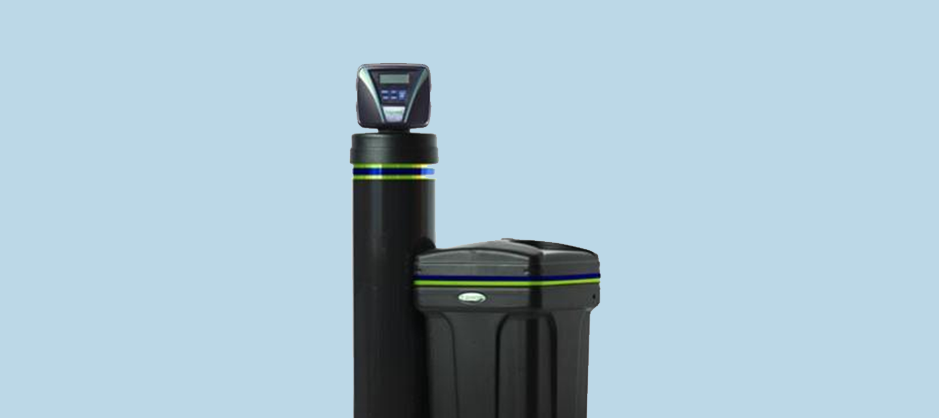
A dual-tank system, also known as a twin-tank system, solves the inefficiency problem. It has two separate resin tanks connected by a single control valve, and one shared brine tank.
Upfront Cost
This is the main drawback of a dual-tank system. You're buying two complete resin tanks. A dual-tank softener will typically cost you 2 to 3 times more than a comparable single-tank unit, with prices often starting around $1,500 to $3,000+. Installation can also be more complex and costly due to the larger system.
Regeneration
This is where the dual-tank system shines. The system is designed for 24/7 soft water.
While one tank is online and actively softening your water, the other is on standby, fully charged. The control valve monitors the exact volume of water being softened. When the online tank reaches its maximum capacity, the valve instantly flips, putting the fresh, charged tank online. At that exact moment, the first tank begins its regeneration cycle.
This means:
You never have hard water: Even during a 2 AM regeneration, you are getting soft water from the other tank.
Regeneration is on-demand and precise: The system regenerates only when necessary, at the absolute peak of its capacity. There is zero guessing, zero under-regeneration, and zero waste.
4. The True Cost of Ownership: Breakdown
The price of the unit is only one part of the equation. To find the true cost, you have to look at long-term operating expenses. Let's break down the key categories.
| Cost Component | Single-Tank | Dual-Tank |
|---|---|---|
| Upfront Cost (Equipment + Labor) |
$800 – $1,800 | $1,800 – $4,000+ |
| Annual Salt Usage | High (300–500 lbs) | Low (150–300 lbs) |
| Annual Water Waste | High (Manual schedule) | Minimal (On-demand) |
| Maintenance Frequency | Moderate (More wear) | Low (Optimized cycles) |
| System Lifespan | 10–15 Years | 20–25+ Years |
| 24/7 Soft Water? | No (Hard water at 2 AM) | Yes (Always) |
5. Efficiency and Resource Use
This is where the financial difference becomes clear over time. Let's quantify it.
Salt Efficiency
The wasteful regeneration cycle of single-tank softeners is a major cost driver. They can regenerate 2-4 times more often than necessary. For an average family, this can add up to 200-300 lbs of wasted salt per year. In a high-water-usage home, that number is even higher. At $10-$15 per 40-pound bag, you're easily looking at $50-$100+ in annual wasted salt costs.
Dual-tank systems use precisely what is needed, leading to massive salt savings. Over 10 years, that’s $500 to $1,000 or more in salt savings alone.
Water Efficiency
Each regeneration cycle on a single-tank softener uses 30-50 gallons of water to flush the system. If it's regenerating twice as often as it needs to, it’s wasting 1,500-3,000 gallons of water per year. For a high-usage home on a municipal water line, this is a real expense. Dual-tank systems use significantly less water for the same softening capacity.
6. Maintenance Needs
Maintenance is a lesser-known cost. All water softeners need regular checkups to ensure the valve is working correctly, the resin hasn't become fouled, and there are no leaks.
Single-Tank: More frequent regenerations mean more wear and tear on the control valve. Its internal parts (gears, pistons, seals) are moving far more often, making it more likely to need repairs or parts replacement. The single resin tank is also under more constant strain, which can lead to it breaking down sooner.
Dual-Tank: With far fewer regeneration cycles, the valve and other components have a much longer lifespan. A quality dual-tank system, because of its efficient operation, can easily last 20-25+ years with minimal maintenance. This greatly reduces its lifetime repair costs and delays the expensive need for a full replacement.
7. Real-World Examples: Who Benefits Most?
Let's look at how this plays out in actual households. This is where the true cost of ownership becomes practical.
Scenario A: Large Family with Variable Usage
Family Size: 5+
Water Usage: High and inconsistent (multiple laundry loads, dishwashers, baths, and showers).
The Winner: Dual-Tank Softener. This is the classic scenario where a single-tank system is a financial disaster. With multiple people, its regeneration cycle will be frequent, and its estimate will often be off, leading to huge amounts of wasted salt and water. A single-tank system would likely run out of soft water before 2 AM, leaving a family of 5 with hard water for part of the day, which damages all their expensive appliances. The savings in salt, water, and appliance protection over 10-20 years will far exceed the higher upfront cost.
Scenario B: Small Household with Moderate Usage
Family Size: 1-2
Water Usage: Low and consistent.
The Winner: Single-Tank Softener. In this case, the efficiency gap is much smaller. The single-tank system won't need to regenerate nearly as often. Its estimates will be more accurate, so it will be less wasteful. While a dual-tank system is still more efficient, the potential annual salt savings might only be $20-$30. It would take decades to make up the $1,000+ difference in upfront cost. A single-tank system is the smart, cost-effective choice.
Scenario C: Home with Extremely Hard Water
Water Hardness: Very High (e.g., >30 grains per gallon)
Family Size: 4
The Winner: Dual-Tank Softener. Extremely hard water means the resin must be regenerated far more frequently. For a family of 4, a single-tank system would be regenerating almost daily, leading to an unacceptable level of salt and water waste. The operational cost would be massive. A dual-tank system is an absolute must in this environment. It's not just a convenience; it’s a non-negotiable for long-term affordability and protecting your home's infrastructure.

8. Final Verdict: Which Saves You More Money?
There is no single "correct" answer. The most cost-effective option entirely depends on your situation.
If you are a small, low-usage household, A single-tank water softener is likely the better choice. Its lower upfront cost makes more sense because the potential long-term efficiency savings from a dual-tank system would not justify its much higher price tag.
If you have a large family, variable water usage, or extremely hard water: A dual-tank water softener is, without a doubt, the more cost-effective choice in the long run. Its slightly higher upfront investment is a small price to pay for the massive, year-over-year savings in salt, water, maintenance, and the total protection it provides for your appliances and plumbing. This is where the dual-tank system proves its value.

Stop Guessing and Start Saving
Don’t let hard water take a toll on your home’s plumbing and your wallet.
Whether you need the compact efficiency of a single-tank system or the 24/7 power of a dual-tank setup, we’re here to help you find the perfect fit.
Contact WaterSmart today for a consultation and to learn more about our high-quality, Canadian-made water softeners.
“Fast and friendly interactions, great company to get water softener replaced from. Literally called, and they booked me in right away. Install took 1 hr and everything was up and running again. Also, the technician came on time, and there were message updates through the phone prior to installation, and as the technician was enroute. Thank you! Would recommend.”