You spend your Saturday morning scrubbing the glass shower door with vinegar and elbow grease. It looks sparkling - for about three days. Then, like clockwork, those cloudy white spots and crusty buildup - hard water stains - return to your faucets, showerheads, and tiles.
If you feel like you’re losing a war against your own plumbing, you aren’t alone. For many homeowners, hard water stains aren't just a cleaning nuisance; they are a symptom of a chemistry problem that a spray bottle simply cannot solve.
Click on the links below to learn more.
Ready to say goodbye to hard water stains for good? Contact us for the best water softener solution in Kitchener-Waterloo.
Key Takeaways
The Mineral Culprit: High concentrations of calcium and magnesium crystallize as water evaporates, creating "rock" deposits on surfaces.
The Cleaning Cycle: DIY methods like vinegar only treat the surface-level symptoms and require constant, back-breaking repetition.
The Permanent Fix: A water softener removes minerals via ion exchange before they enter your home’s tap.
The Economic Win: Soft water can save the average household hundreds of dollars annually in soap, energy, and appliance repairs.
1. The Science of the Spot: Why Hard Water Happens
"Hardness" isn't a measure of how the water feels, but rather what is dissolved inside it. As rainwater travels through the ground, it acts as a natural solvent.
In regions like Kitchener-Waterloo, where groundwater travels through high concentrations of limestone and dolomite, the water picks up significant levels of calcium and magnesium ions.
When this mineral-heavy water flows through your home, two things happen:
Evaporation
When droplets sit on your shower door or chrome faucet and air-dry, the water disappears, but the minerals stay behind. They bond to the surface, creating those stubborn white "rings."
Heat Precipitation
When hard water is heated (like in your dishwasher or water heater), the minerals become less soluble and "fall out" of the water, forming a rock-hard layer of limescale inside your pipes and appliances.
2. The DIY Trap: Why Cleaning Isn’t Enough
Most homeowners start with "hacks" to manage the mess. While these methods are great for a quick shine, they are fundamentally reactive rather than proactive.
Vinegar and Lemon Juice: These mild acids are excellent at dissolving calcium carbonate. However, the moment you rinse the area with your tap water, you are reapplying the very minerals you just removed.
Abrasive Scrubbers: Using stiff brushes or steel wool can strip the protective finish off your fixtures or create micro-scratches in glass. These tiny scratches actually give minerals more surface area to cling to, making future stains even harder to remove.
Chemical Descalers: Heavy-duty store-bought cleaners can be effective, but they are often caustic. Over time, these chemicals can degrade rubber seals in your faucets and contribute to environmental runoff—all while costing you a significant amount in monthly supplies.

3. The Real Solution: How a Water Softener Works
If scrubbing is a temporary bandage, a water softener is the permanent cure. To understand why it’s so effective, you have to look past the tank and into the microscopic world of ion exchange. This isn't just a filter that catches dirt; it is a chemical engine designed to swap hard minerals for soft ones.
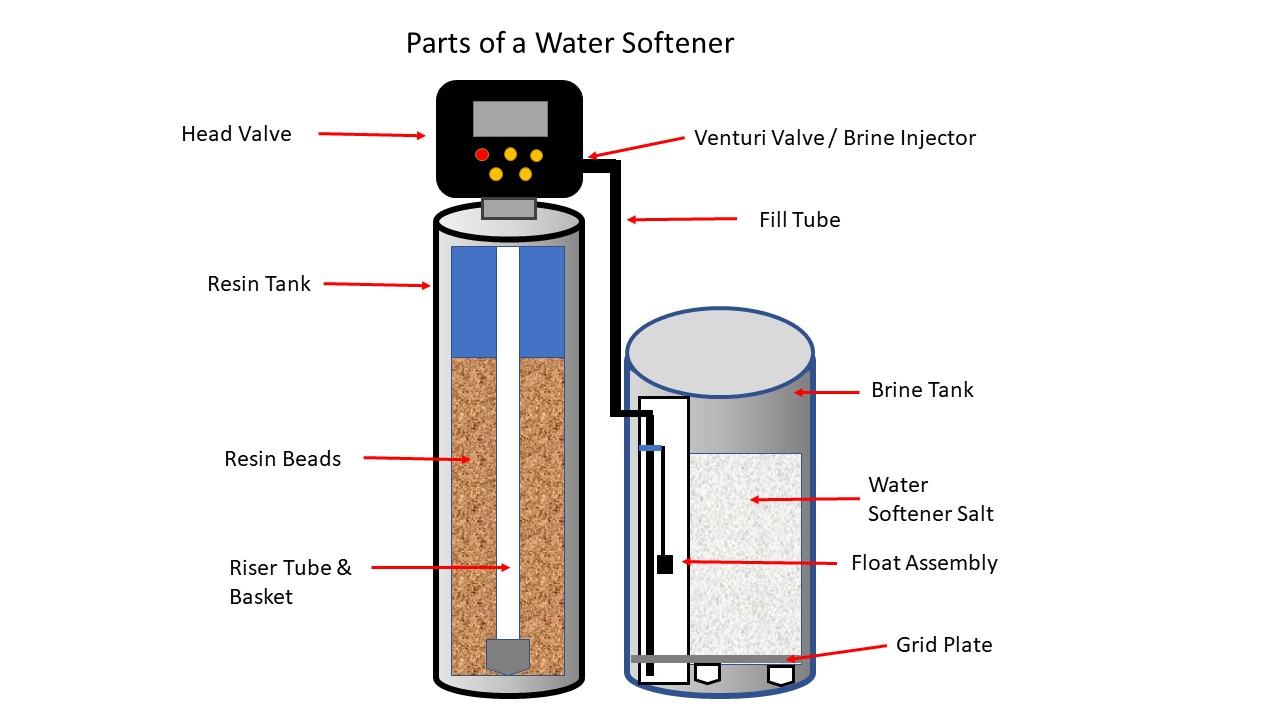
Here’s how it works:
The Resin Bed: Inside the softener tank are millions of tiny, negatively charged resin beads. Our softeners use 10% resin.
The Exchange: As hard water flows through the tank, the positively charged calcium and magnesium ions act like magnets, sticking to the beads and displacing a tiny amount of sodium ions.
The Result: The water exiting the tank is now chemically incapable of forming limescale. It simply cannot leave a spot because the "rock" has been removed from the liquid.
The Regeneration: Periodically, the system flushes itself with a brine solution to "recharge" the beads and send the trapped minerals down the drain.
4. The Long-Term Benefits and Savings
The initial investment in a water softener is often seen as a luxury, but when you look at the hidden costs of hard water, it’s actually a strategic financial move.
Hard water acts as a silent tax on your household, draining your wallet through increased energy consumption, premature appliance failure, and excessive cleaning supply costs.
1. Extended Appliance Lifespan
Your dishwasher, washing machine, and coffee maker all rely on internal heating elements. In a hard water environment, these elements quickly become coated in a thick layer of limescale.
This acts as an insulator, forcing the appliance to work harder and run hotter to achieve the same results. Research suggests that soft water can help appliances last 30% to 50% longer, delaying expensive replacement costs by years.
2. Significant Energy Savings
The most dramatic savings often appear on your utility bills. When limescale builds up inside your water heater, it creates a barrier between the burner and the water.
Even a 1/4-inch of scale in a water heater can increase energy costs by as much as 25% because the unit has to run significantly longer to reach the desired temperature.
3. Reduced Detergent and Chemical Usage
Hard water minerals "react" with soap, turning it into a dull grey curd (soap scum) rather than a cleaning lather. This means you end up using twice as much laundry detergent, shampoo, and dish soap just to get a basic clean.
With soft water, soap remains effective, allowing you to cut your cleaning product budget by half immediately.
say goodbye to hard water stains for good?
If you are tired of the endless scrub-and-repeat cycle, it’s time to stop guessing. Water hardness varies significantly even between neighborhoods in Kitchener-Waterloo, and your system needs to be precisely calibrated to be effective.
Contact Us for a Professional Water Hardness Test to find out exactly what’s in your water and get a tailored, Canadian-made water softener solution for your home.
“The technician was on time very personable and did a great job. I am pretty fussy and I would recommend Watersmart.”