How Long Does Water Softener System Installation Take? Costs, Steps & Tips

Dealing with stubborn limescale on your fixtures or "spotty" dishes after a wash? Investing in a water softener system installation is the most effective way to eliminate hard water problems, protecting your home’s plumbing and extending the life of your appliances.

While the prospect of cutting into your main water line can feel daunting, the installation process is a well-refined science that typically takes less than a single afternoon. From the moment the technician arrives to the first time you turn on a faucet and feel the difference, the transition to soft water is surprisingly swift.

In this guide, we will break down exactly how long the installation takes, what the process looks like step-by-step, and the current 2026 costs you should anticipate.

  1. Average Installation Timeline

  2. Step-by-Step Installation Process

  3. Factors Affecting Installation Time

  4. 2026 Cost Breakdown

  5. Preparation Tips for Homeowners

  6. Benefits of Professional Water Softener System Installation

Whether you are replacing an aging unit or installing a system in a brand-new home, this walkthrough will prepare you for a seamless installation day. Contact us to book your installation today.


Key Takeaways

  • Speed: Most standard professional installations are completed in a 2 to 4-hour window.

  • Infrastructure: Homes with a "softener loop" (pre-plumbed) enjoy the fastest and cheapest installations.

  • Hardness Levels: Knowing your water’s GPG (Grains Per Gallon) is the most critical factor for system calibration.

  • Compliance: Professional installers ensure the system meets local plumbing codes and environmental drainage regulations.

1. Average Installation Timeline

While the physical labour of connecting pipes is the primary focus, the "clock" for a water softener system installation begins the moment the technician arrives and ends only after a successful test cycle.

  • Initial Assessment (30–60 Minutes): This isn't just a walkthrough. The installer must locate the main water shut-off, identify the nearest drain and power source, and perform a final water test. Even if you've had your water tested before, a professional will verify the hardness level on-site to ensure the system is programmed accurately from minute one.

  • Plumbing & Hardware Setup (1.5–2.5 Hours): This is the "heavy lifting" phase. It involves cutting the main water line, installing the bypass valve, and routing the drain lines. If your home requires a new electrical outlet or a new drain line to be plumbed through a wall, this phase will lean toward the 2.5-hour mark.

  • Programming & Commissioning (30–60 Minutes): Once the unit is physically connected, it must be "brought to life." This involves filling the brine tank, setting the internal clock, inputting the hardness data, and running a manual "recharge" cycle to check for leaks under pressure.

By understanding these phases, homeowners can better plan their day around the temporary water shut-off required for the install.


2. Step-by-Step Installation Process

  1. Site Prep & Water Testing: The technician tests your water’s hardness in Grains Per Gallon and iron content. This ensures the resin bed is sized correctly for your specific needs.

  2. The Water Shut-Off: The main water valve is closed, and the lowest faucets in the house are opened to drain the remaining water from the pipes.

  3. Cutting the Main Line: The installer cuts into the cold water line after it enters the home, but before it splits to the water heater. This ensures both your hot and cold water (except for outdoor hoses, usually) are softened.

  4. Installing the Bypass Valve: This is a crucial three-way valve that allows you to "bypass" the softener for tasks like watering the lawn or if the unit ever needs repair.

  5. Connecting the Tanks: The resin tank (the tall one) and the brine tank (the salt tank) are positioned. The plumbing is connected to the "In" and "Out" ports of the control valve.

  6. Drain & Overflow Lines: A discharge hose is run from the softener to a floor drain or utility sink. A second "overflow" line is often attached to the brine tank as a safety measure.

  7. System Start-up: The technician adds 1–2 bags of salt, adds a specific amount of water to the brine tank, and starts a manual regeneration cycle. This flushes out any "fines" (tiny resin beads) or debris from the installation process.

Each of these steps is vital to ensure that your system operates efficiently without wasting salt or water.

3. Factors Affecting Installation Time

Not every home is built the same, and these variables can significantly alter the labour involved:

  • Pipe Material: Soldering copper pipes takes significantly more time and precision than using "push-to-connect" fittings or PEX crimping. If you have older galvanized steel pipes, the process may involve threading or specialized adapters.

  • Drain Access: The system needs to discharge saltwater every few days. If there isn't a floor drain or standpipe within 10–15 feet, the installer may need to pump the discharge upward or through an exterior wall.

  • Power Availability: Modern softeners need an outlet to run the digital timer and motorized valve. If an outlet isn't within reach, an electrician may be needed, or the plumber will need to run an extension or new line.

  • System Complexity: A simple salt-based softener is straightforward. However, if you are installing a multi-stage system that includes a sediment pre-filter, a carbon filter, and a UV purifier, the plumbing becomes much more intricate.

Homeowners should expect a longer installation day if their plumbing is older or if the unit is being placed in a difficult-to-reach location.

4. 2026 Cost Breakdown

The following table reflects the current 2026 market rates for equipment and professional labour.

System Type Unit Cost Labor & Materials Estimated Total
Single-Tank Ion Exchange $600 – $1,200 $500 – $800 $1,100 – $2,000
Dual-Tank (High Demand) $1,500 – $2,500 $700 – $1,200 $2,200 – $3,700
Salt-Free Conditioner $800 – $1,800 $600 – $900 $1,400 – $2,700
Whole-Home RO System $4,000 – $8,000 $1,500 – $3,000 $5,500 – $11,000

5. Preparation Tips for Homeowners

To keep labour costs down and the process moving quickly, take these steps before the pro arrives:

  • Clear a Path: Move boxes, storage, or laundry piles away from the water main and the area where the tanks will sit (approx. a 3ft x 4ft space).

  • Locate Your Main Shut-off: If your main valve is old or "frozen," the plumber will need to know this immediately, as it may need replacement before the softener can be installed.

  • Check Your Salt: Most installers do not carry 40lb bags of salt in their vans. Have 200lbs of high-purity pellet salt on hand for the initial fill.

  • Verify the Drain: Ensure your floor drain is not blocked by debris. The softener will discharge several gallons of water at a high flow rate during its first cycle.

Proper preparation can shave up to an hour off the total installation time and prevent "surprise" labour charges.

6. Benefits of Professional Installation
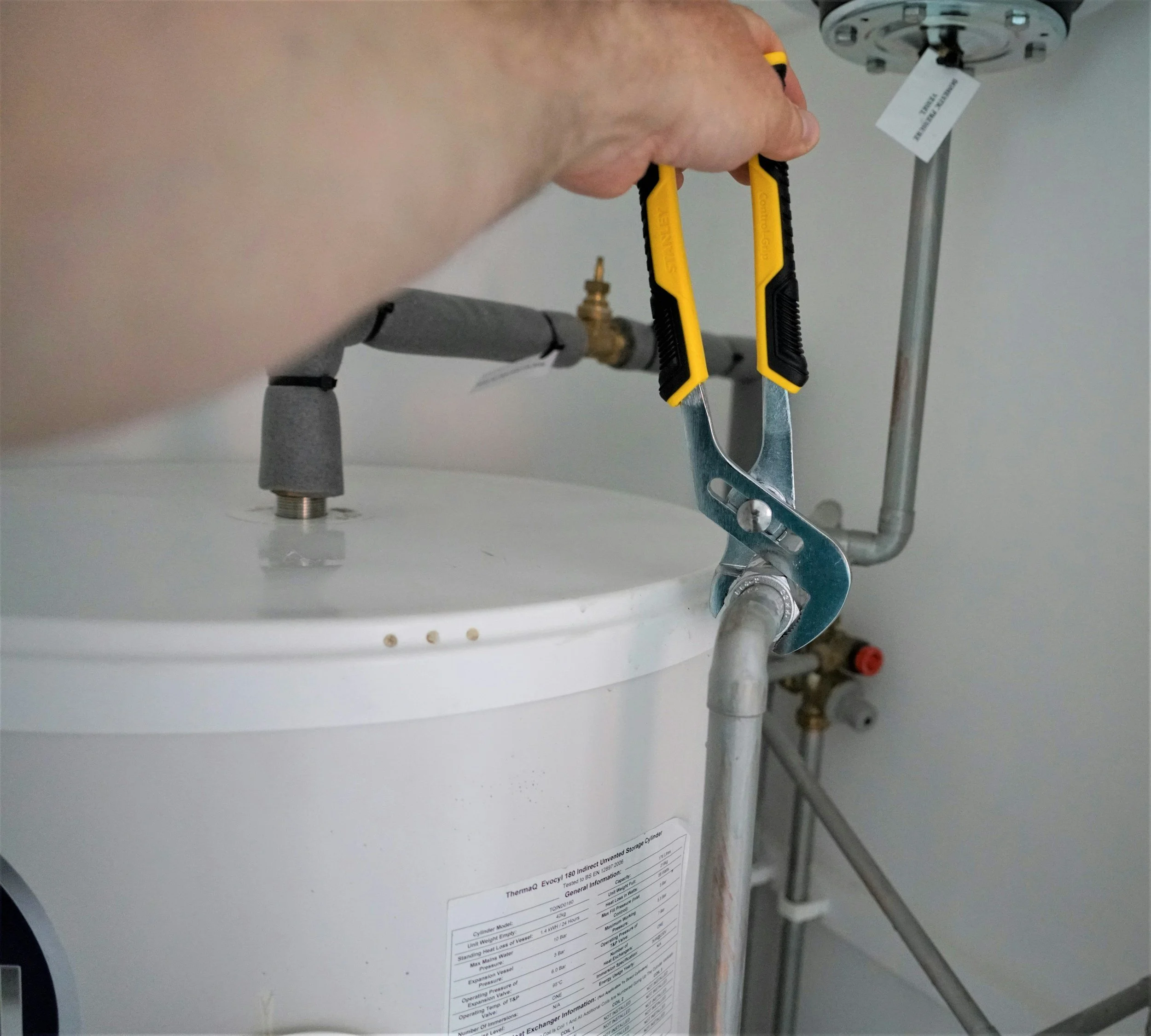
While a "handy" homeowner can technically install a softener, a professional ensures long-term peace of mind.

Plumbers understand the Air Gap requirements - a critical safety gap between the drain line and the sewer to prevent raw sewage from ever siphoning back into your drinking water.

Furthermore, a professional can properly "size" the unit. An oversized unit wastes salt, while an undersized unit will wear out prematurely and leave you with hard water during high-usage times (like when running the shower and dishwasher simultaneously).

Most professional installs also come with a 1-year labour warranty, protecting your investment from leaks or programming errors.


Export, Local Water Softener System Installation

At WaterSmart Systems & Plumbing, our licensed technicians have decades of experience servicing and installing all types of water softeners.

Whether it’s a quick repair, annual inspection, or complete system upgrade, we’re here to help you protect your investment and enjoy reliably soft water year-round.

We proudly install high-performance, Canadian-made 10% resin water softeners designed to give you cleaner, softer water with less hassle, year after year.

And remember, installation is always free with the purchase of any WaterSmart water softener. In addition, we install our Smart Series water softeners a little differently than the conventional softener to make it more water-efficient.

Contact us today for a free water test or to learn more about the benefits of upgrading to 10% resin.


We wanted a reverse osmosis system and to own our water softener. We called Watersmart. A salesperson named Paul came to our house. Told us it would be no problem to install. Told me the cost and put no sales pressure or long diatribes on me. I learned to find out Paul is the owner. We booked an install for a Monday 9:00am. 9:00am Monday Ethan showed up to install water softener 10 minutes later Scott arrived to install RO System. Both very professional and knowledgeable. 1 hour 45 minutes later install complete and no mess. I highly recommend this company.
— Steve Meikle
 

Water System Filtration Options Compared: Carbon, Reverse Osmosis & More

Choosing the right water system filtration is a balance between your home’s specific "water profile"—what is actually in your pipes—and your household’s daily needs.

Whether you are on municipal water, dealing with chlorine or have a private well concerned about bacteria, there is a configuration designed for your home.

  1. Common Water Filtration Options Explained

  2. Comparison Table

  3. Selecting the Best Water Filtration Solution for Your Home

  4. Professional Testing & Recommendations

WaterSmart Systems has been serving the Waterloo Region for over 30 years, and the focus is always on clean, safe, great-tasting water for your home backed by exceptional service.

Contact us today for all your water system filtration needs.


Key Takeaways

  • Carbon filters are the "Gold Standard" for taste and odor but don't remove dissolved solids (TDS) or bacteria.

  • Reverse Osmosis (RO) offers the most comprehensive purification for drinking water, removing up to 99% of all contaminants.

  • UV Systems are essential for well water or areas with boil-water advisories; they "scramble" the DNA of pathogens without using chemicals.

  • Sediment filters are usually the first line of defence, protecting your plumbing and more expensive filters from physical debris.

1. Common Water system Filtration Options Explained

In the province of Ontario, filtration is required for all surface water systems and for non-secure groundwater systems that are vulnerable to surface water contamination.

Here are some of the best options.

Carbon Filtration (Adsorption)

Carbon filters use activated carbon (often from coconut shells) to "grab" contaminants as they pass through. It is the most common technology in pitchers, fridge filters, and whole-house systems.

  • Best For: Improving taste and removing chlorine/chloramines.

  • Removes: Chlorine, VOCs, pesticides, and unpleasant odours.

  • Maintenance: Replace cartridges every 6–12 months.


Reverse Osmosis (RO)

RO systems force water through a semi-permeable membrane at high pressure. This process is so fine it removes almost everything—including minerals—resulting in "bottled water quality" at home.

  • Best For: Dedicated drinking water taps where total purity is the goal.

  • Removes: Fluoride, lead, arsenic, nitrates, and dissolved salts (TDS).

  • Maintenance: Replace pre/post filters every 6–12 months; replace the membrane every 2–3 years.


Ultraviolet (UV) Purifiers

UV systems don't "filter" in the traditional sense; they use ultraviolet light to neutralize living organisms. They are strictly for disinfection and are often used as a final stage in well water systems.

  • Best For: Homes with well water or high bacterial risk.

  • Removes: 99.99% of bacteria, viruses, and cysts (e.g., E. coli, Giardia).

  • Maintenance: Replace the UV lamp annually (even if it still glows).


Sediment Systems

These act like a fine mesh screen, catching physical particles. They are almost always "pre-filters" for larger systems to prevent clogging.

  • Best For: Homes with visible dirt, sand, or rust in the water.

  • Removes: Dirt, silt, sand, and rust flakes.

  • Maintenance: Replace every 3–6 months, depending on water turbidity.


Here’s a helpful video that gives more context to these options:

2. Comparison Table

Not all filters are created equal. While a basic pitcher might make your coffee taste better, it won’t protect your family from heavy metals or well-water bacteria. To choose the right system, you must first identify your "target contaminant."

Use the comparison table below to see how the four industry-standard technologies stack up against one another in terms of filtration power, cost, and maintenance.

Feature Carbon Filter Reverse Osmosis UV Purifier Sediment Filter
Primary Goal Taste & Odor Purest Drinking Water Killing Pathogens Physical Clarity
Pore Size 0.5 – 5 Microns 0.0001 Microns N/A (Light-based) 1 – 50 Microns
Lead/Arsenic? Specialty only Yes No No
Bacteria? No Yes (Most) Yes (Best) No
Annual Cost $50 – $150 $120 – $250 $70 – $150 $30 – $80
Waste Water None 3:1 ratio (avg) None None

Which One Do You Actually Need?

  • For City Dwellers: If your water is safe but smells like a swimming pool, a Carbon Filter is your best value. It targets the chlorine used by municipal treatment plants.

  • For Maximum Safety: If you are concerned about lead, fluoride, or "forever chemicals" (PFAS), Reverse Osmosis is the only solution that provides near-total removal.

  • For Private Wells: If you draw water from the ground, you likely need a "stack." Start with a Sediment Filter to catch sand, followed by a UV Purifier to ensure no living bacteria reach your glass.

  • The "Hybrid" Approach: Most homeowners find that a combination is best. For example, installing a Whole-House Sediment filter to protect your appliances and an Under-Sink Reverse Osmosis system for pure drinking water.


3. Selecting the Best Water Filtration Solution for Your Home

By Water Quality Concern

  • Chlorine Taste: A simple Carbon Block under-sink or countertop system.

  • High TDS / Hardness: A Reverse Osmosis system (often paired with a water softener for the whole house).

  • Well Water: A Multi-Stage System including Sediment + Carbon + UV for safety.

By Household Size & Budget

  • Single/Renter ($50–$150): Pitcher or faucet-mounted carbon filters.

  • Family ($200–$600): Under-sink RO system for drinking and cooking.

  • Full Home Protection ($1,000+): Whole-house "Point of Entry" (POE) system that treats every tap in the house.

4. Professional Testing & Recommendations

Before investing, test your water. You can use a DIY kit for basic parameters like pH and hardness, but a certified laboratory test is recommended for well owners to check for lead, nitrates, and bacteria.

Expert Tip: Look for the NSF/ANSI Certification on any system you buy. NSF 42 covers taste and odor, while NSF 53 and 58 cover health-related contaminants like lead and chromium.

Here at WaterSmart, we provide comprehensive in-home or in-store water testing in the Kitchener-Waterloo, Cambridge, and Guelph areas to analyze hardness, chlorine, pH, iron, and total suspended solids.

Our specialists use these results to recommend tailored water softeners, filtration systems, or UV purification, typically reporting results within a few days.


WaterSmart Systems & Plumbing: Experts in Water Filtration

If you’re weighing the benefits of water filtration and how best to approach it, our team can help you make the right choice for your local-area home

Whether you’re installing a new system, upgrading an older unit, or simply looking for expert advice, we’ll guide you every step of the way.

At WaterSmart, we proudly provide the best Canadian-made water softeners along with professional installations.

Our factory-trained technicians can set up your system quickly and efficiently—and installation is always free when you purchase a new water softener from us.

With local expertise and decades of experience, we’ll ensure you get the solution that fits your water test results, household needs, and long-term goals.

From consultation to installation, we make it easy to enjoy the benefits of clean, reliable water in your Waterloo home.

Contact us today to get started.


If I could give more stars I would. This company is top notch ... I would wholeheartedly recommend this company to everyone and anyone. They have saved us so much money and been so fair and honest.
— E Gracic
 

The Ultimate Guide to Water Efficiency for Ontario Homeowners

In Ontario, water conservation isn't just a responsible environmental choice—it's a smart financial decision. By adopting water-efficient habits and upgrading your home, you can significantly lower your utility bills and help protect our precious freshwater resources for future generations. Residential water use accounts for nearly 60% of municipal water consumption, meaning your actions make a big difference!

  1. Optimize Your Water Softener for Maximum Savings

  2. The Essential Leak Detection and Repair Program

  3. Investing in Smart Appliances and Fixtures

  4. Outdoor Water Conservation and Ontario Regulations

  5. Ontario Rebate and Incentive Programs

  6. Frequently Asked Questions (FAQ)

WaterSmart Systems has been serving the Waterloo Region for over 30 years, and the focus is always on clean, safe, great-tasting water for your home backed by exceptional service.

Contact us today for all your home water solutions.


Key Takeaways

  • Fix Leaks First: The fastest way to cut your bill is by checking and repairing leaks, especially in toilets (the largest source of indoor waste).

  • Go DIR: If you have a water softener, switch from an old-time-based model to a Demand-Initiated Regeneration (DIR) system to save thousands of litres of water and hundreds of kgs of salt annually.

  • Soften Hot Water Only: Modify your plumbing to only soften the hot water line for significant water and salt savings. This may qualify for a local rebate.

  • Look for WaterSense: Replace old fixtures with WaterSense-labelled toilets and showerheads for guaranteed efficiency.

  • Know Your By-laws: Adhere to local Odd/Even day watering by-laws and time restrictions during summer months to avoid fines and conserve water.

  • Check Local Rebates: Investigate your local municipality (e.g., Guelph, Region of Waterloo) for specific rebates on toilet replacements, rain barrels, or plumbing modifications.

1. Optimize Your Water Softener for Maximum Savings

Many parts of Ontario have hard water, making a softener a necessity.

However, an inefficient softener wastes thousands of litres of water and hundreds of kilograms of salt annually.

1. Choose a High-Efficiency Model

The biggest factor in water and salt waste is the type of softener you own.

  • Actionable Tip: If you have an older, time-initiated softener (it regenerates on a set schedule regardless of use), consider replacing it.

  • WaterSmart Solution: Look for a Demand-Initiated Regeneration (DIR) model, like the WaterSmart Smart Series or Econo Series. These systems use sensors to only regenerate when the resin tank is truly depleted, saving both water and salt.

2. Fine-Tune Your Softener Settings

Correct settings are essential for efficiency, especially concerning the salt dosage.

Setting Action for Efficiency Benefit
Water Hardness Set to your actual local water hardness (Grains per Gallon, or GPG). Prevents over-regeneration and excess salt use.
Regeneration Type Use DIR (Demand-Initiated Regeneration). Only regenerates when necessary, minimizing water waste.
Salt Dosage Consult your manual or a professional to find the lowest effective salt dose. Lower salt dosages achieve higher salt efficiency (less salt per grain removed).

3. Consider Hot Water-Only Softening

A common and highly effective strategy to save both salt and water.

  • Strategy: Reroute your cold water line so that it bypasses the water softener. This leaves cold water for drinking, cooking, toilets, and outside taps unsoftened, significantly reducing the volume of water the softener needs to treat.

  • Potential ROI: Softening only hot water can save a household of three up to 8,800 litres of water and 108 kg of salt per year.

  • WaterSmart Solution: The Region of Waterloo has offered a Water Softener Plumbing Rebate for homeowners who switch from softening both hot and cold water to hot water only. Contact WaterSmart Systems & Plumbing for this specific plumbing service.

2. The Essential Leak Detection and Repair Program

A small, persistent leak can cost you more than you realize. A single dripping faucet can waste over 20 litres of water per day, and a running toilet can waste thousands.

1. The Toilet Dye Test

Toilets are the most common source of hidden leaks.

  • Step 1: Place a few drops of food colouring in the toilet tank (the back reservoir).

  • Step 2: Wait 15 to 20 minutes without flushing.

  • Step 3: If the colour appears in the toilet bowl, you have a leak.

2. Check Your Water Meter

Use your main water meter to check for leaks when no water is being used.

  • Step 1: Turn off all indoor and outdoor water taps and appliances.

  • Step 2: Read the number on your water meter (or check the leak indicator dial).

  • Step 3: Read the meter again after 2 hours. If the reading has changed, you have a leak.

3. Promptly Repair Leaks

  • Actionable Tip: Replace faulty toilet flappers, fix dripping faucets, and check outdoor hose bibs for slow drips.

  • Local Policy Note: Many municipalities, such as the City of Guelph, have a Leak Forgiveness Policy for residential homes. If you have a high water bill due to a leak that you promptly fix, you may be eligible for a credit.

3. Investing in Smart Appliances and Fixtures

Upgrading old appliances is a major step toward water efficiency and often qualifies for rebates.

1. WaterSense-Labelled Fixtures

Look for the WaterSense label, which identifies products that are at least 20% more water-efficient than average.

  • Toilets: Replace older toilets (pre-1994, which can use up to 20 litres per flush) with Ultra Low Flow (ULF) or High-Efficiency Toilets (HET).

    • Rebate Example: The Township of Centre Wellington offers a $75 rebate per eligible replacement toilet (check for current program status, as they are often limited).

  • Showerheads and Faucets: Install low-flow showerheads (using $\le 7.6$ litres per minute) and faucet aerators.

2. Efficient Appliances Checklist

Appliance Efficiency Standard Water-Saving Habit
Washing Machine ENERGY STAR® certified high-efficiency clothes washer. Always run full loads.
Dishwasher ENERGY STAR® certified model. Run only when full and do not rinse dishes beforehand.
Irrigation System Use a weather-based or soil moisture sensor controller. Ensures your lawn is not watered when it's raining or when the soil is already moist.

4. Outdoor Water Conservation and Ontario Regulations

Outdoor water use can more than double your water bill in the summer. Smart watering is crucial.

1. Mandatory Lawn Watering Regulations

Many Ontario regions enforce "Odd/Even Day" watering by-laws during peak summer months (typically May to September).

  • Regulation: Homes with even civic numbers can water outdoors on even calendar days. Homes with odd civic numbers can water outdoors on odd calendar days.

  • Time Restrictions: Watering is typically only permitted during specific hours, like 6 a.m.–9 a.m. and 6 p.m.–9 p.m.

  • Actionable Tip: Use a tuna can to measure rainfall and watering. Your lawn only needs about 2.5 centimetres (1 inch) of water per week, including rain.

2. Water-Wise Gardening

  • Install Rain Barrels: Collect rainwater from downspouts for use in your garden. This water is chlorine-free and perfect for plants.

  • Xeriscaping: Choose native, drought-tolerant plants suited to the Ontario climate, which require minimal supplemental watering.

  • Mulch: Apply a layer of organic mulch around plants and trees to retain soil moisture and reduce evaporation.

5. Ontario Rebate and Incentive Programs

While the federal Canada Greener Homes Grant focused primarily on energy efficiency (insulation, windows, heat pumps), local and provincial programs exist specifically for water efficiency.

Program/Incentive Focus Area Notes & Status
Water Softener Rebates Plumbing Modification (Hot Water Only) Offered by some municipalities (e.g., Region of Waterloo). Check local program details.
Royal Flush Toilet Rebates High-Efficiency Toilet Replacement Offered by some municipalities (e.g., City of Guelph, Township of Centre Wellington). Check local program status and limits.
Rain Barrel/Rain Garden Rebates Outdoor Water Reuse/Runoff Management Offered by various municipalities. Programs often provide discounts or rebates on purchase/installation.
Blue Built Home Certification Comprehensive Water Efficiency A regional program (e.g., Region of Waterloo) that certifies homes built or retrofitted to high water-saving standards.

6. Frequently Asked Questions (FAQ)

Q. How can I save water in Ontario?

A. You can save water in Ontario by:

  1. Fixing leaks promptly, especially in toilets.

  2. Upgrading to WaterSense-labelled fixtures like low-flow toilets and showerheads.

  3. Optimizing your water softener to regenerate less frequently and only treat hot water.

  4. Following local by-laws for outdoor watering (e.g., odd/even day schedules) and collecting rainwater with a rain barrel.

Q. Is there a rebate for water softeners in Ontario?

A. Rebates for water softener improvements in Ontario are typically offered at the municipal or regional level, not provincially. For example, some regions offer a rebate for modifying your plumbing to soften only your hot water, which significantly reduces water and salt use. You should check with your specific city or region's utility office for current programs.

Q. What is the most effective way to reduce my water bill?

A. The single most effective way to reduce your water bill is to fix leaks and install high-efficiency toilets. Leaks are often the largest source of undetected water waste, and toilets account for up to 65% of indoor residential water use. Addressing these two areas provides the fastest and most significant return on investment.


Ready to Get WaterSmart?

For personalized water testing, professional installation of high-efficiency water softeners, leak repair, and plumbing services tailored to Ontario's water challenges, contact a local water expert.

➡️ Click here to connect with WaterSmart Systems & Plumbing for a home water review and to learn more about our high-efficiency water softeners and services.

Whether you’re installing a Canadian-made water softener, adding a filtration solution, or simply looking for expert advice, we’ll guide you to the right solutions other local families trust for long-term results.

Thank you for choosing WaterSmart. We look forward to providing your household with the same care, attention, and quality we’d give our own families.


Very professional, fast, and knowledgeable.
— Jose Argueta
 

How Your Water Quality Affects Your Skin, Hair, and Health

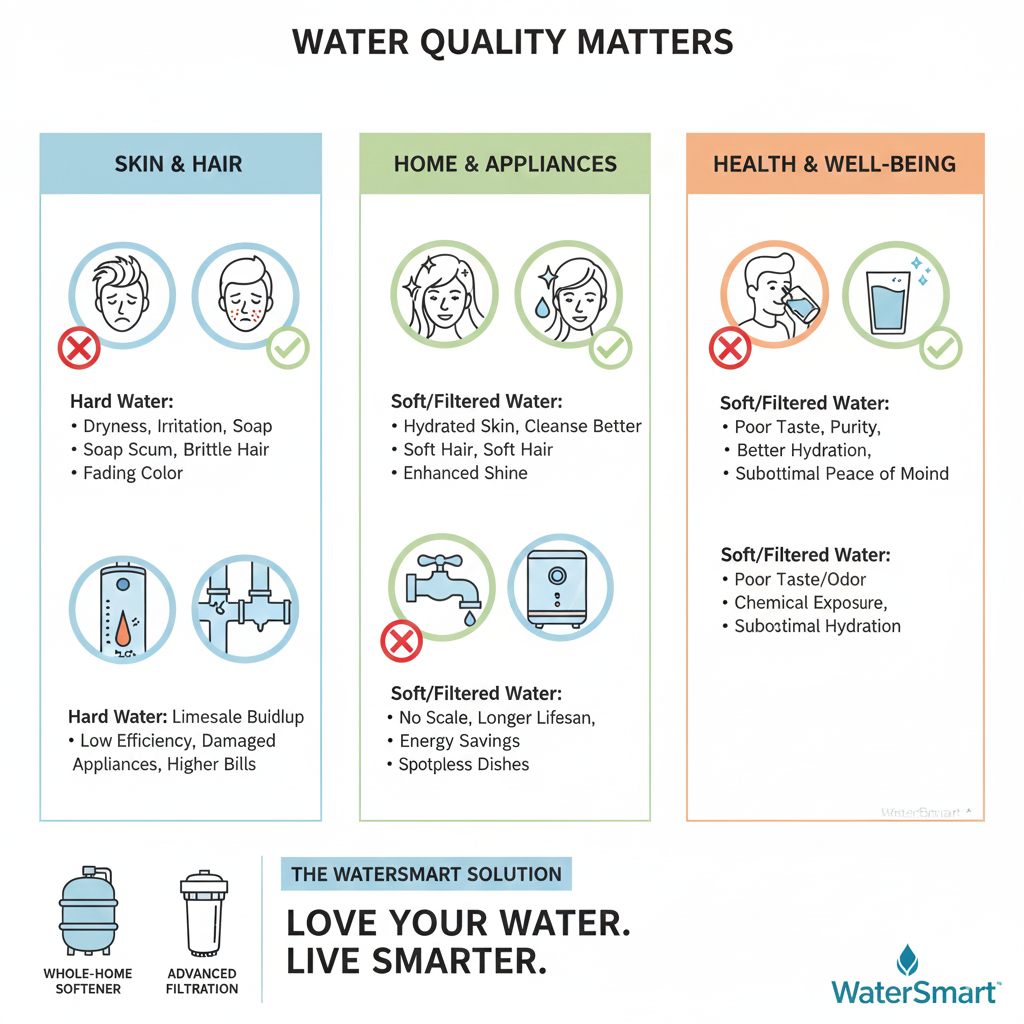
We often focus on what we put on our bodies, but what about the water we use to wash and drink? The quality of your water can have a significant, yet often overlooked, impact on your skin, hair, and overall health. From dry, irritated skin to dull, brittle hair and even scaling appliances, many common problems can be traced back to the water flowing through your pipes.

  1. Understanding Hard Water and Contaminants

  2. How Water Quality Affects Your Complexion

  3. Battling Brittle, Dull Hair

  4. Beyond Beauty: Water Quality and Your Overall Health

  5. The WaterSmart Solution: Simple Steps to Better Water

  6. Frequently Asked Questions

WaterSmart Systems has been serving the Waterloo Region for over 30 years, and the focus is always on clean, safe, great-tasting water for your home backed by exceptional service.

Contact us today for all your home water solutions.


Key Takeaways

  • Hard Water = Soap Scum: Calcium and magnesium minerals react with soap to form a residue that clogs pores, dries skin, and dulls hair.

  • Chlorine is a Stripper: Chlorine, while necessary for municipal safety, strips natural oils from your skin and hair, leading to increased dryness and sensitivity.

  • Appliances Suffer: Hard water causes limescale in kettles, water heaters, and dishwashers, increasing energy costs and requiring costly repairs.

  • WaterSmart Softeners eliminate the cause of hard water problems, protecting your skin, hair, and home infrastructure.

  • WaterSmart Filters remove chemical contaminants like chlorine and heavy metals, ensuring healthier drinking and bathing water.

1. Understanding Hard Water and Contaminants

So, what exactly is in your water that causes these issues? The culprits are often hard water and various contaminants.

Hard water contains elevated levels of dissolved minerals, primarily calcium and magnesium. While these minerals aren't harmful to drink, they can wreak havoc on your body.

"Calcium and magnesium in hard water react with fatty acids in your soap and shampoo to form chemicals that coagulate," says Dr. Tess Mauricio, a board-certified dermatologist in Beverly Hills.

"As a result, your skin doesn't get cleaned properly and the chemicals leave a residue on your skin. Over time, this skin residue can disrupt the skin barrier. It causes your pores to clog up, which, in turn, can lead to acne and exacerbate skin conditions like eczema and dermatitis."

Beyond hardness, contaminants present in tap water can include:

  • Chlorine and Chloramines: These disinfectants are necessary for municipal safety but are harsh chemicals that can strip natural protective oils from your skin and hair. This compromises the skin's barrier function, leading to increased dryness, sensitivity, and irritation.

  • Heavy Metals: Metals like lead or copper can leach into water from older pipes and plumbing, posing serious health risks when consumed.

  • Sediment: Tiny particles like sand, rust, or silt can affect the clarity and taste of your water, and even act as abrasives on your skin and hair.

2. How Water Quality Affects Your Complexion

Have you ever noticed your skin feeling tight, itchy, or dry after a shower, even after applying moisturizer? Hard water and contaminants are likely to blame.

  • Dryness and Irritation: The mineral deposits in hard water prevent soap from rinsing completely, leaving a film on your skin. This film can clog pores, leading to breakouts, and prevent your skin from absorbing moisture effectively, resulting in chronic dryness and irritation.

  • Reduced Product Effectiveness: Lotions, serums, and cleansers struggle to perform their best when hard water interferes. The minerals can create a barrier, hindering the absorption of beneficial ingredients.

  • Exacerbated Skin Conditions: For individuals with sensitive skin, eczema, or psoriasis, hard water can worsen symptoms, leading to increased redness, flakiness, and discomfort.


3. Battling Brittle, Dull Locks

Your hair is also a major casualty of poor water quality. The same minerals that leave residue on your skin cling to your hair strands, causing a cascade of problems.

  • Dullness and Lack of Shine: Mineral buildup forms a coating on the hair cuticle, making your hair look dull, lifeless, and heavy. This buildup reflects less light, robbing your hair of its natural shine.

  • Brittle and Dry Texture: Hard water makes it difficult for moisturizers and conditioners to penetrate the hair shaft. Over time, this results in brittle, dry hair that is prone to breakage and split ends.

  • Fading Color: Chlorine and other chemicals, common in unfiltered tap water, can significantly accelerate the fading of colored or chemically treated hair.

4. Water Quality and Your Overall Health

While the visual effects on your skin and hair are obvious, poor water quality has consequences that extend into your home's infrastructure and even your long-term health.

Aspect Water Quality Impact Resulting Problem
Pipes & Appliances Mineral buildup (limescale) from hard water. Scaling appliances, reduced efficiency of water heaters, increased energy bills, and clogged pipes.
Drinking Water Presence of chlorine, heavy metals (like lead), or VOCs (Volatile Organic Compounds). Poor taste and odor, and potential long-term health concerns, particularly for vulnerable populations.
Hydration Bad-tasting water discourages drinking. Suboptimal hydration can affect mood, energy levels, and bodily functions.

5. The WaterSmart Solution: Simple Steps to Better Water

The good news is that you don't have to live with the negative effects of poor water quality. WaterSmart offers targeted solutions to treat water at the source.

  1. WaterSmart Whole-Home Softeners: These systems remove the dissolved calcium and magnesium ions that cause hard water. The result is truly soft water that lathers easily, keeps your skin hydrated, protects your hair's luster, and extends the life of your appliances.

  2. WaterSmart Water Filters (Carbon & Reverse Osmosis): For addressing contaminants, a filter is essential.

    • Whole-house carbon filters are excellent for removing chlorine, improving shower water quality.

    • Under-sink Reverse Osmosis (RO) systems provide the cleanest, best-tasting drinking water by removing up to 99% of dissolved solids, including heavy metals and chemical contaminants.

Daily Water-Use Tips

  • Use a Cold Rinse: Rinse your hair with cool water to seal the cuticles and prevent mineral deposit penetration.

  • Minimize Exposure: Take shorter showers to reduce the time your skin and hair are exposed to hard or chlorinated water.

  • Test Your Water: Contact WaterSmart for a free water quality test to know exactly what's in your water and choose the right solution.

6. Frequently Asked Questions (FAQ)

Here are answers to common questions about water quality and its impact on your skin, hair, and health.

General Water Quality

  • What is the difference between hard water and contaminated water? Hard water contains high levels of dissolved minerals, primarily calcium and magnesium. It's not usually a health threat, but it causes scale, dryness, and residue. Contaminated water contains substances like chlorine, heavy metals, or bacteria that can pose health risks or affect taste and odor.

  • How do I know if I have hard water? Common signs of hard water include limescale buildup on faucets and appliances, soap that doesn't lather well, and skin/hair that feels dry, dull, or sticky after washing. The best way to know for sure is to get a professional water test.

Skin and Hair Effects

  • How does hard water affect my hair? Hard water minerals (calcium and magnesium) leave a film on the hair cuticle. This buildup causes hair to look dull, feel brittle, become prone to breakage, and prevents conditioners from moisturizing the hair effectively.

  • Can a water softener help with my dry skin or eczema? Yes, many people find relief. Hard water leaves a soap scum residue on the skin that clogs pores and prevents moisturizer absorption. Soft water rinses away soap completely, allowing your skin's natural moisture barrier and applied lotions to work properly, potentially reducing dryness and irritation.

  • Why does my skin feel itchy after showering? Itching can be caused by two factors: the soap scum residue left by hard water, which irritates the skin, and chlorine in the water, which strips the skin's natural oils, causing severe dryness and disrupting the protective skin barrier.

Home and Health

  • Does bad-tasting water affect my health? While some bad tastes (like chlorine) may be harmless in small amounts, they are often a sign that contaminants or chemical byproducts are present. Furthermore, bad-tasting water often discourages proper hydration, which can negatively affect your energy, mood, and overall body function.

  • How does hard water damage appliances? When hard water is heated, the dissolved calcium and magnesium minerals precipitate out and form a hard deposit called limescale (or scale). This scale clogs pipes, reduces the efficiency of water heaters and dishwashers, and shortens the lifespan of any appliance that uses water.

  • What is the best solution for improving all my home's water quality? A combination approach is usually best: a WaterSmart water softener is used to remove the hardness minerals (calcium and magnesium), and a WaterSmart whole-house or point-of-use filter (like a Reverse Osmosis system) is used to remove chemical contaminants, chlorine, and heavy metals.


Improve Your Home Water, Improve How Your Feel

If you’re ready to enjoy cleaner, softer water and reliable local service, our team is here for you.

Whether you’re installing a Canadian-made water softener, adding a filtration solution, or simply looking for expert advice, we’ll guide you to the right solutions other local families trust for long-term results.

Thank you for choosing WaterSmart. We look forward to providing your household with the same care, attention, and quality we’d give our own families.


Thanks for the service and going the extra mile. Great work by servicemen. Explained work completed. Appears to have solved the problem.
— Paul Filsinger
 

DIY Plumbing Upgrades That Pair Perfectly with a Water Softener

You pour a glass of crystal-clear water from your tap. It tastes fine. It looks clean. But what if that clear water is hiding invisible threats that could be impacting your health and your home?

The truth is, even in areas with rigorously tested municipal water, contaminants can sneak in. We’re talking about more than just the occasional boil advisory—we’re talking about persistent, unseen particles and chemicals like microplastics, heavy metals, and bacteria that evade the eye and linger in your home's system.

  1. The Invisible Threats Lurking in Your Water

  2. Water Quality Concerns: The Ontario Connection

  3. Your Actionable Solutions

  4. FAQ: Your Water Safety Questions Answered

WaterSmart Systems has been serving the Waterloo Region for over 30 years, and the focus is always on clean, safe, great-tasting water backed by exceptional service.

Contact us today for all your home water solutions.


Key Takeaways

  • Invisible Threats Exist: Even clear, municipal water may contain contaminants like Microplastics, Lead, Arsenic, and Disinfection Byproducts (THMs) that pose long-term health risks.

  • The Major Ontario Risk: Lead leaching from old plumbing is a primary concern for homeowners in older communities across the province. Private wells are completely unregulated and must be tested by the owner.

  • Testing is Essential: You cannot detect these contaminants by sight or smell; professional water testing is the only way to confirm what is in your home's water.

  • RO is Gold Standard: Reverse Osmosis (RO) systems are the most effective solution for removing the widest range of invisible contaminants, including heavy metals and microplastics, from your drinking water.

  • Protect Your Whole Home: A Whole Home Carbon Filter is recommended to reduce exposure to chlorine and chemical contaminants during bathing and showering.

1. The Invisible Threats Lurking in Your Water

Microscopic invaders into your home’s water system come from a mix of sources, including aging infrastructure, industrial runoff, and even the simple act of flushing drugs down the drain. Their health impacts are often chronic, building up over the years.

1. Microplastics: Tiny Pollutants, Big Problem

These are fragments of plastic less than 5mm in length, and they are everywhere - including your drinking water.

  • The Source: Plastic debris breaks down in the environment, and particles can enter water sources from wastewater treatment systems. Some studies have found microplastics in drinking water, though concentrations vary widely (WHO, 2019).

  • The Health Impact: While the World Health Organization currently considers the risk from ingested microplastics to be low based on available data, the long-term effects of ingesting the smallest particles (nanoplastics) and the chemicals they carry are still being studied. Experts note potential concerns like oxidative stress, endocrine disruption, and inflammation from the additives and other pollutants that adhere to the plastic surface (NIH/PMC, 2022).

2. Heavy Metals: The Silent System Destroyers

Heavy metals like Lead and Arsenic are among the most dangerous chronic contaminants.

  • The Source: Lead most often leaches into water from corroding lead service lines and old household plumbing, which is a major concern in older Canadian cities. Arsenic can be naturally occurring in groundwater or a result of industrial waste.

  • The Health Impact (Citing CDC/Health Canada):

    • Lead: Even low levels can cause neurological damage, developmental delays, and reduced IQ in children. In adults, it's linked to cardiovascular and kidney issues.

    • Arsenic: A known human carcinogen associated with increased risk of skin, lung, and bladder cancer.

3. Bacteria and Disinfection Byproducts

While water is treated to kill microbes, the process itself can sometimes create new issues, and distribution systems can introduce new bacteria.

  • The Source: Total Coliform and E. coli can indicate a breach in the water treatment or distribution system, often from runoff or a well being affected by human/animal waste. Municipal water is disinfected (usually with chlorine), but this forms Disinfection Byproducts (DBPs), such as Trihalomethanes (THMs).

  • The Health Impact:

    • Bacteria (e.g., E. coli): Immediate acute effects like severe gastrointestinal illness.

    • DBPs (THMs): Long-term exposure is linked to a possible increased risk of liver damage and cancer (Ontario Drinking Water Quality Standards).

2. Water Quality Concerns: The Ontario Connection

For homeowners in Ontario, understanding local risks is essential. While municipal water is subject to strict testing under the Ontario Drinking Water Quality Standards (ODWS), specific regional and local factors still pose risks:

  • Lead Piping: Older city homes, particularly in the GTA and other historic communities, are at risk of lead contamination from aging service lines and plumbing. While testing is mandatory in schools and childcare centres, homeowners must be proactive.

  • Private Wells: Over 1 million Ontarians rely on private well water, which is not regulated by the ODWS. These systems are highly susceptible to contamination from agricultural runoff (nitrates/pesticides) and naturally occurring elements (radon, uranium, arsenic).

  • Emerging Contaminants (PFAS): Chemicals like Per- and Polyfluoroalkyl Substances (PFAS), used in many consumer and industrial products, have been detected in the Great Lakes basin. While levels are often below Canadian guidelines, they are monitored closely due to potential links to cancer and decreased vaccine response in children.

3. Your Actionable Solution: WaterSmart Products

The best way to protect your family and your home is to install a certified water filtration system.

WaterSmart offers advanced, Canadian-tested solutions designed to tackle the contaminants most relevant to Ontario homes.

WaterSmart Solution Contaminants Treated Benefits for Health & Home
Reverse Osmosis (RO) Systems Heavy Metals (Lead, Arsenic), Microplastics, Nitrates, THMs, Cysts/Bacteria
  • Health: Delivers ultra-pure water for drinking and cooking.
  • Home: Prevents scale buildup in kettles/ice makers.
Whole Home Carbon Filters Chlorine, THMs, VOCs (Volatile Organic Compounds), Pesticides
  • Health: Reduces chemical exposure from all water (showers, bath, drinking).
  • Home: Extends the life of appliances and improves water taste/odor.
UV Water Purifiers Viruses and Bacteria (E. coli, Giardia, Cryptosporidium)
  • Health: A critical, chemical-free final barrier against microbial contamination, especially for private well owners.
  • Home: Low maintenance and highly effective.

4. FAQ: Your Water Safety Questions Answered

Is my tap water safe to drink in Ontario?

While municipal tap water is generally safe and regularly tested according to the Ontario Drinking Water Quality Standards (ODWS), contaminants can still be present due to factors like aging plumbing (lead pipes) or temporary breaches in the system. If you rely on private well water, it is not regulated by the government, and you must test it annually yourself.

How do I know if I have invisible contaminants in my water?

Invisible contaminants like lead, microplastics, arsenic, and bacteria have no taste, smell, or colour. The only way to know for sure is to have your water professionally tested by an accredited laboratory. Bring a water sample to us, and we will test it on the spot.

What is the best way to remove microplastics from my drinking water?

Advanced filtration systems, such as Reverse Osmosis (RO), are highly effective at removing extremely fine particles, including microplastics. Activated carbon filters and ultrafiltration can also significantly reduce their presence.

Should I use a Point-of-Use or a Whole Home water filter?

  • Point-of-Use (e.g., RO system at the kitchen sink): Ideal for purifying water used specifically for drinking and cooking.

  • Whole Home (Point-of-Entry): Recommended for treating all water entering your home, which reduces exposure to chlorine, disinfection byproducts, and chemicals during showering, laundry, and bathing. For comprehensive protection, installing both is often recommended.


Worried About Your Home Water? We’re Here For You.

If you’re ready to enjoy cleaner, softer water and reliable local service, our team is here for you.

Whether you’re installing a new system, upgrading an older unit, or simply looking for expert advice, we’ll guide you to the right solutions other local families trust for long-term results.

Thank you for choosing WaterSmart. We look forward to providing your household with the same care, attention, and quality we’d give our own families.


I would wholeheartedly recommend this company to everyone and anyone. They have saved us so much money and been so fair and honest that I only wish they also did water heaters because we want to replace that equipment too.
— E Gracic
 
Powered By ProfitWorks.ca
" "