Top 7 Whole Home Water Softeners for Canadian Homes (2026 Buyer’s Guide)

Living in Canada often means dealing with some of the hardest water in North America. From the high mineral content in the Grand River basin to the deep-well systems across the Prairies, hard water isn't just a nuisance - it’s a threat to your plumbing, appliances, and skin health.

If you are looking for the best whole-home water softener in Canada, this 2026 guide breaks down the top-rated systems, efficiency ratings, and what you need to know about cold-climate installations.

  1. Top Featured Models for 2026 (Comparison Table)

  2. Deep Dive: The WaterSmart Made-in-Canada Lineup

  3. How to Choose Your Whole Home Water Softener

We truly believe we sell and install the best, Canadian-made water softeners in the business.

If you want to make the move to better, softer water, contact WaterSmart today to book an appointment.


Key Takeaways

  • Predictive Savings: Modern "Look Ahead" technology (like the Smart Series) tracks your water habits to reduce salt and water waste by up to 30%.

  • Pressure Performance: For multi-bathroom homes, prioritize high flow rates (e.g., 27 GPM in the Tahoe Series) to prevent water pressure drops during peak usage.

  • Canadian Engineering: Made-in-Canada systems are specifically designed to handle regional "Extremely Hard" water levels (20–30+ GPG) that standard retail units often fail to treat.

  • Professional Value: Top 2026 models now include Free Installation and specialized financing—like No Interest/No Payments for 6 months—to protect your home's plumbing immediately.

Top 7 Water Softeners for Canada (2026)

Model Best For Key Advantage Warranty
WaterSmart Tahoe High-Flow Homes 27 GPM flow rate prevents pressure drops in large households 7-year parts / 5-year labour
WaterSmart Smart Series Efficiency “Look Ahead” logic regenerates only when needed, saving ~30% on salt 5-year parts / 5-year labour
WaterSmart Econo Budget Value Solid-state system with on-demand regeneration at a lower price point 5-year parts / 1-year labour
SpringWell SS1 Longevity 10% crosslink resin resists chlorine damage better than standard systems Lifetime (Manufacturer)
SoftPro Elite HE Eco-Conscious Homes Upflow regeneration uses less water and salt per cycle Lifetime (Manufacturer)
Fleck 5600SXT Simple Reliability Widely serviceable valve with easy-to-find replacement parts 5-year valve / 10-year tank
Kinetico Premier Series Power Outages Non-electric dual-tank system provides soft water 24/7 10-year (Manufacturer)

2. Deep Dive: The WaterSmart Made-in-Canada Lineup

When shopping for a water softener in Canada, "Made in Canada" isn't just about supporting the local economy - it’s about engineering. Our systems are built to withstand the high mineral concentrations found in regional aquifers.

1. The Tahoe Series (Best for Large Households)

If you have a home with three or more bathrooms, the Tahoe is designed with you in mind. Its rugged design emphasizes high-volume functionality.

  • Performance: High service flow rates of up to 27 GPM mean you can run the dishwasher, laundry, and two showers at once without noticing a drop in water pressure.

  • Durability: Built with industrial-grade components to ensure a long lifespan under heavy use.

2. The Smart Series (Best for Tech-Forward Efficiency)

The Smart Series is the intelligent choice for the eco-conscious homeowner.

  • The "Look Ahead" Advantage: Most softeners regenerate on a fixed schedule. The Smart Series tracks your actual daily water usage and "looks ahead" to see if it has enough capacity for the next day. If not, it regenerates precisely when needed.

  • Efficiency: This predictive technology can save a typical family hundreds of pounds of salt per year.

3. The Econo Series (Best Value for Modern Homes)

The Econo Series provides the essential benefits of soft water without the high price tag.

  • Reliability: It features a solid-state programmable computer that manages regeneration based on water usage, not just a timer. This "on-demand" system ensures you aren't wasting salt when you're away on vacation.

Most retail softeners use standard 5-8% resin, which can break down and turn "mushy" when exposed to the chlorine used in municipal water treatment. WaterSmart systems utilize 10% high-grade crosslink resin, which is significantly more resistant to chemical wear, ensuring your system maintains peak performance for up to 20 years.


3. How to Choose: The Canadian Buyer’s Checklist

Canadian homeowners face unique challenges that many generic buyer's guides overlook:

Extreme Hardness

In regions like Southern Ontario, water hardness can exceed 30 GPG. Standard retail softeners often struggle to keep up with these levels, leading to premature resin failure.

If you live in our service area (Kitchener, Waterloo, Guelph, Cambridge), you are dealing with some of the hardest water in the country. To give you an idea of what your system is up against, here are the average hardness levels for our local municipalities:

Note: 1 grain per gallon (GPG) is approximately 17.1 mg/L. Anything over 10.5 GPG is considered "Very Hard."

Cold-Climate Plumbing

In the winter, incoming water temperatures can drop significantly. Professional installation is vital to ensure brine tanks are properly positioned away from freezing exterior walls and that the system settings are adjusted for colder water cycles.

So, choosing a softener requires more than picking a brand. You need to understand the mechanical requirements of your specific home.

  1. Calculate Your Grain Capacity: To find your ideal size, take the number of people in your home multiplied by 300 litres (average daily use). Multiply that by the Grains of Hardness in your water. An average household usually requires a 30,000 to 45,000 grain system.

  2. Salt-Based vs. Salt-Free: Salt-based systems (Ion Exchange) are the only systems that physically remove calcium and magnesium. Salt-free systems are "conditioners"—they prevent scale but do not provide the soft water "feel" or the soap-saving benefits.

  3. Efficiency Ratings: Look for "Demand Initiated Regeneration" (DIR). This ensures the system only cleans itself when the resin is actually exhausted.

Use our Water Softener Calculator to find out the ideal water softener for your home in 30 seconds or less.


Whole home water softeners: experience The WaterSmart Advantage

BASIC INSTALLATION IS ALWAYS FREE WITH THE PURCHASE OF ANY WATERSMART WATER SOFTENER!

We aren't just a business; we’re your neighbours. As a family-owned company, every customer we serve in the Kitchener-Waterloo, Cambridge, and Guelph area is treated like a member of our own family.

Why Our Local Expertise Matters:

  • A Personal Guarantee: When you choose WaterSmart, you’re getting more than a product - you’re getting our personal promise of the best service possible.

  • Fully Insured Professionals: Our factory-trained technicians are fully insured and licensed. We don’t just "install" a unit; we meticulously calibrate it to ensure it performs at the highest efficiency for our specific local water conditions.

  • We’re Here to Help: We never just drop a unit and leave. Our team takes the time to walk you through exactly how your new softener works, answering every question so you feel confident from the very first cycle.

We have partnered with Financeit to help your next big purchase be more affordable. We invite you to take a look at our financial options through Financeit; find out if you’re approved in seconds, no obligation and no commitment!

Contact us today to schedule a convenient time for your professional installation!


Dropped in to the store and received a warm welcome and lots of good information. I ended up ordering a new Canadian made softener. It was installed within days. The installation was booked easily and the installer arrived on time. The job was done as quoted. It was very neat and tidy. I would suggest anyone needing a softener inspection or new unit installed, call WaterSaver. Friendly people and a job well done. I would recommend their service and quality products.
— Chris from Canada
 

Hard Water Stains Keep Coming Back? Here’s When a Water Softener Is the Real Fix

You spend your Saturday morning scrubbing the glass shower door with vinegar and elbow grease. It looks sparkling - for about three days. Then, like clockwork, those cloudy white spots and crusty buildup - hard water stains - return to your faucets, showerheads, and tiles.

If you feel like you’re losing a war against your own plumbing, you aren’t alone. For many homeowners, hard water stains aren't just a cleaning nuisance; they are a symptom of a chemistry problem that a spray bottle simply cannot solve.

Click on the links below to learn more.

  1. The Science of the Spot: Why Hard Water Happens

  2. The DIY Trap: Why Cleaning Isn’t Enough

  3. The Real Solution: How a Water Softener Works

  4. The Long-Term Benefits of Making the Switch

Ready to say goodbye to hard water stains for good? Contact us for the best water softener solution in Kitchener-Waterloo.


Key Takeaways

  • The Mineral Culprit: High concentrations of calcium and magnesium crystallize as water evaporates, creating "rock" deposits on surfaces.

  • The Cleaning Cycle: DIY methods like vinegar only treat the surface-level symptoms and require constant, back-breaking repetition.

  • The Permanent Fix: A water softener removes minerals via ion exchange before they enter your home’s tap.

  • The Economic Win: Soft water can save the average household hundreds of dollars annually in soap, energy, and appliance repairs.

1. The Science of the Spot: Why Hard Water Happens

"Hardness" isn't a measure of how the water feels, but rather what is dissolved inside it. As rainwater travels through the ground, it acts as a natural solvent.

In regions like Kitchener-Waterloo, where groundwater travels through high concentrations of limestone and dolomite, the water picks up significant levels of calcium and magnesium ions.

When this mineral-heavy water flows through your home, two things happen:

Evaporation

When droplets sit on your shower door or chrome faucet and air-dry, the water disappears, but the minerals stay behind. They bond to the surface, creating those stubborn white "rings."

Heat Precipitation

When hard water is heated (like in your dishwasher or water heater), the minerals become less soluble and "fall out" of the water, forming a rock-hard layer of limescale inside your pipes and appliances.

2. The DIY Trap: Why Cleaning Isn’t Enough

Most homeowners start with "hacks" to manage the mess. While these methods are great for a quick shine, they are fundamentally reactive rather than proactive.

  • Vinegar and Lemon Juice: These mild acids are excellent at dissolving calcium carbonate. However, the moment you rinse the area with your tap water, you are reapplying the very minerals you just removed.

  • Abrasive Scrubbers: Using stiff brushes or steel wool can strip the protective finish off your fixtures or create micro-scratches in glass. These tiny scratches actually give minerals more surface area to cling to, making future stains even harder to remove.

  • Chemical Descalers: Heavy-duty store-bought cleaners can be effective, but they are often caustic. Over time, these chemicals can degrade rubber seals in your faucets and contribute to environmental runoff—all while costing you a significant amount in monthly supplies.


3. The Real Solution: How a Water Softener Works

If scrubbing is a temporary bandage, a water softener is the permanent cure. To understand why it’s so effective, you have to look past the tank and into the microscopic world of ion exchange. This isn't just a filter that catches dirt; it is a chemical engine designed to swap hard minerals for soft ones.

Here’s how it works:

  1. The Resin Bed: Inside the softener tank are millions of tiny, negatively charged resin beads. Our softeners use 10% resin.

  2. The Exchange: As hard water flows through the tank, the positively charged calcium and magnesium ions act like magnets, sticking to the beads and displacing a tiny amount of sodium ions.

  3. The Result: The water exiting the tank is now chemically incapable of forming limescale. It simply cannot leave a spot because the "rock" has been removed from the liquid.

  4. The Regeneration: Periodically, the system flushes itself with a brine solution to "recharge" the beads and send the trapped minerals down the drain.

4. The Long-Term Benefits and Savings

The initial investment in a water softener is often seen as a luxury, but when you look at the hidden costs of hard water, it’s actually a strategic financial move.

Hard water acts as a silent tax on your household, draining your wallet through increased energy consumption, premature appliance failure, and excessive cleaning supply costs.

1. Extended Appliance Lifespan

Your dishwasher, washing machine, and coffee maker all rely on internal heating elements. In a hard water environment, these elements quickly become coated in a thick layer of limescale.

This acts as an insulator, forcing the appliance to work harder and run hotter to achieve the same results. Research suggests that soft water can help appliances last 30% to 50% longer, delaying expensive replacement costs by years.

2. Significant Energy Savings

The most dramatic savings often appear on your utility bills. When limescale builds up inside your water heater, it creates a barrier between the burner and the water.

Even a 1/4-inch of scale in a water heater can increase energy costs by as much as 25% because the unit has to run significantly longer to reach the desired temperature.

3. Reduced Detergent and Chemical Usage

Hard water minerals "react" with soap, turning it into a dull grey curd (soap scum) rather than a cleaning lather. This means you end up using twice as much laundry detergent, shampoo, and dish soap just to get a basic clean.

With soft water, soap remains effective, allowing you to cut your cleaning product budget by half immediately.


say goodbye to hard water stains for good?

If you are tired of the endless scrub-and-repeat cycle, it’s time to stop guessing. Water hardness varies significantly even between neighborhoods in Kitchener-Waterloo, and your system needs to be precisely calibrated to be effective.

Contact Us for a Professional Water Hardness Test to find out exactly what’s in your water and get a tailored, Canadian-made water softener solution for your home.


The technician was on time very personable and did a great job. I am pretty fussy and I would recommend Watersmart.
— Kevin Hergott
 

Dual-Tank vs Single-Tank Water Softeners: Which Saves More Money?

Choosing a water softener isn't just about softening water; it's an investment in your home's infrastructure and your long-term finances. A good water softener can save you money on replacement appliances and energy bills over time. But there's a crucial decision to make: single-tank or dual-tank?

This question goes beyond simple preference. It's about your household's size, water usage patterns, and budget. This guide will break down the essential differences, focusing on which system can truly save you more money in your specific situation.

  1. What’s the Difference? Regeneration Cycle Explained

  2. Single-Tank Water Softeners

  3. Dual-Tank Water Softeners

  4. The True Cost of Ownership: Breakdown

  5. Efficiency and Resource Use

  6. Maintenance Needs

  7. Real-World Examples: Who Benefits Most?

  8. Final Verdict: Which Saves You More Money?

Contact the experts at WaterSmart today to learn more.


Key Takeaways

  • Regeneration is Key: The central difference is how each system regenerates its resin. Single-tank systems must regenerate offline, while dual-tank systems use one tank to continue softening water while the other regenerates.

  • Single-Tank Pros & Cons: Cheaper upfront, simple to install, small footprint. Cons: Regenerate on a set schedule (can be inefficient), you'll have hard water during the cycle, and you risk over- or under-generating.

  • Dual-Tank Pros & Cons: Regenerate on demand (much more efficient), 24/7 soft water, less water and salt waste, lasts longer. Cons: Significantly higher upfront cost, larger footprint.

  • Who Saves More? Single-tank systems are usually most cost-effective for small, low-usage households. Dual-tank systems are the smarter long-term investment for large families or homes with high/variable water usage, where the massive efficiency gains outweigh the initial price tag.

1. What’s the Difference? Regeneration Cycle Explained

To understand the cost and efficiency differences, we first need to understand how both types of softeners work.

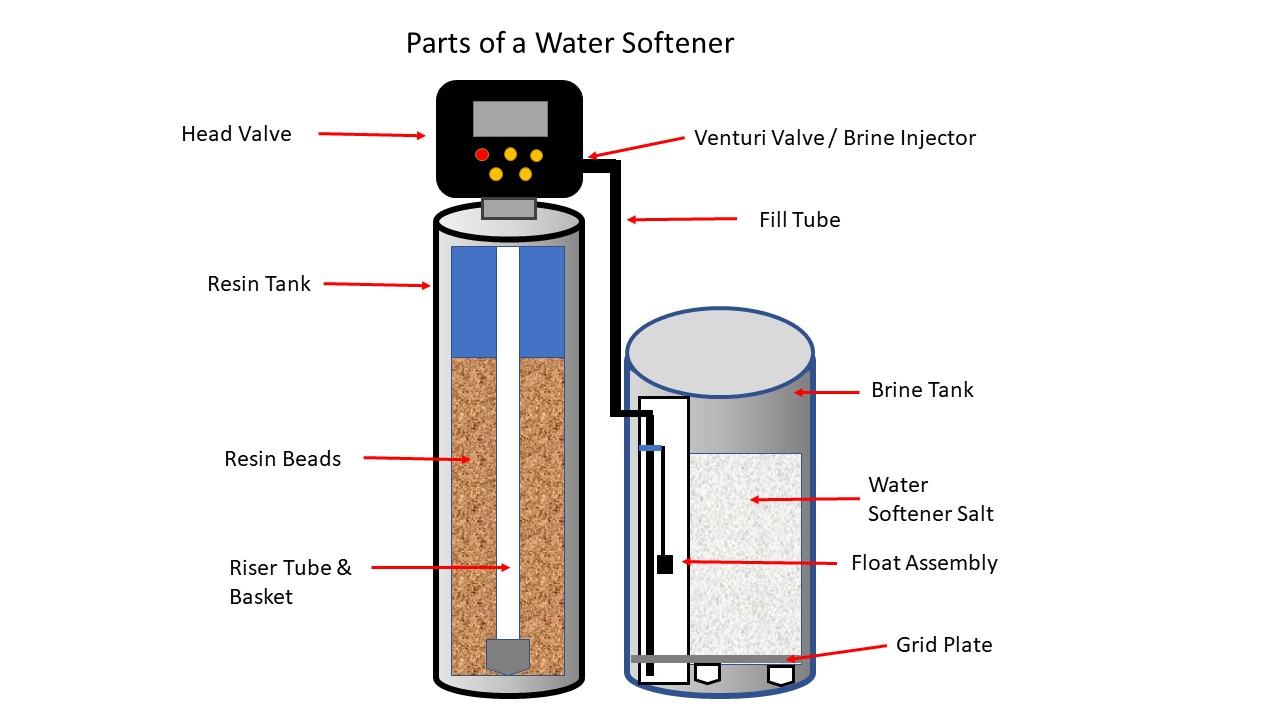
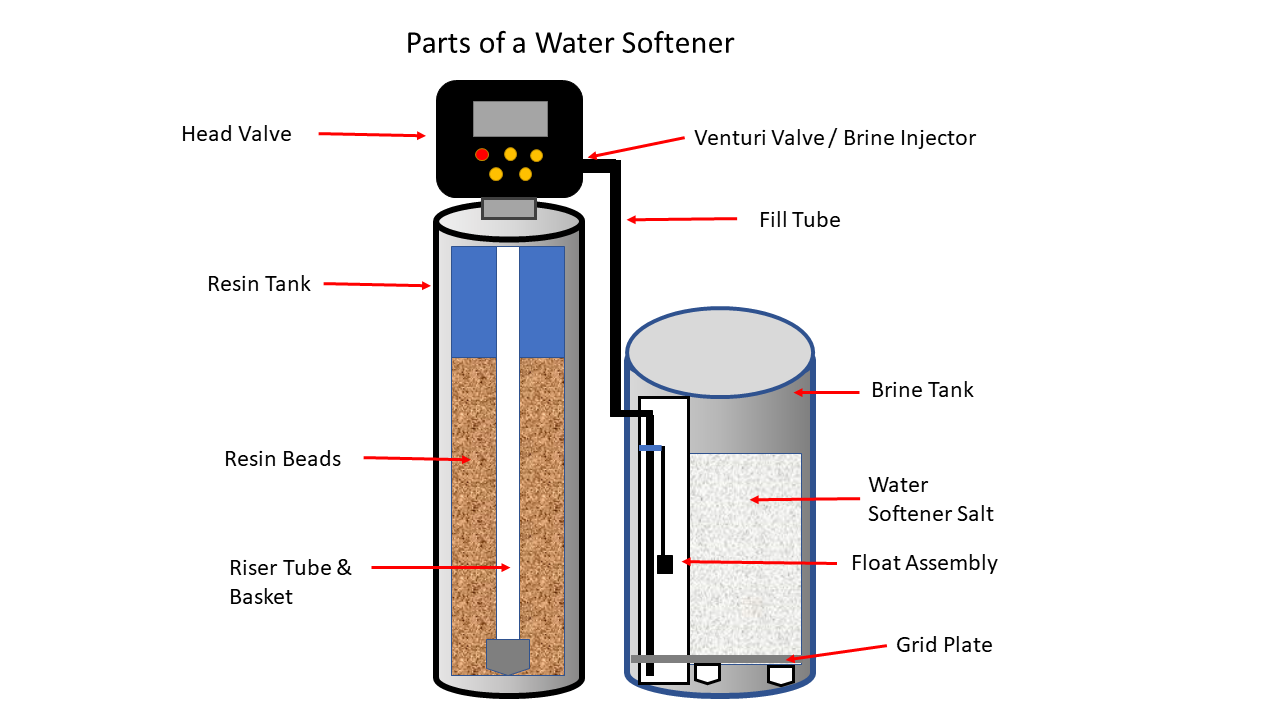
The heart of a water softener is its ion-exchange resin tank. As hard water passes through this tank, the resin beads (coated in sodium or potassium ions) attract and hold the "hard" calcium and magnesium minerals, releasing the "soft" sodium ions into your water.

Over time, this resin gets saturated with hard minerals and can't soften anymore. To work again, it must go through a regeneration cycle, often called "recharging." This process involves a strong saltwater brine solution (from the brine tank) flushing the resin, pushing the hard minerals off the beads and down the drain, and recharging the resin with a fresh layer of sodium or potassium.

The key difference between single- and dual-tank systems lies entirely in how and when this regeneration happens.

2. Single-Tank Water Softeners

Single-tank systems are the traditional and most common type found in homes. As the name suggests, they have one resin tank and one brine tank.

Upfront Cost

This is the main advantage of a single-tank softener. They are significantly less expensive to purchase and install. For a standard-sized, quality unit, you can expect to pay anywhere from $500 to $1,200, excluding installation. This low entry price makes them attractive for budget-conscious homeowners.

Regeneration

Since there's only one tank, it cannot both soften water and regenerate at the same time. The regeneration cycle must take place when no one is using water. Single-tank softeners are typically set to regenerate on a timer, usually at 2 AM.

This is a two-fold inefficiency problem:

  1. Regenerating Too Late (Over-regeneration): If your family uses an unexpected amount of water (e.g., guests staying for a week, extra loads of laundry, filling a pool), the resin might become fully saturated before the scheduled 2 AM cycle. From that point until regeneration, your entire house will have hard water.

  2. Regenerating Too Soon (Under-regeneration): To prevent running out of soft water, softeners are programmed to regenerate after a certain number of gallons or days, based on an estimate. If you haven't used much water that day, the system will still regenerate at 2 AM, wasting both water and salt to recharge resin that was still good. This is a massive source of waste.

You can get an on-demand single-tank softener, which regenerates when its meter shows it has run out of capacity. This is more efficient but still has a fatal flaw: you will have hard water throughout the 1-2 hour regeneration cycle, regardless of when it happens.

3. Dual-Tank Water Softeners

A dual-tank system, also known as a twin-tank system, solves the inefficiency problem. It has two separate resin tanks connected by a single control valve, and one shared brine tank.

Upfront Cost

This is the main drawback of a dual-tank system. You're buying two complete resin tanks. A dual-tank softener will typically cost you 2 to 3 times more than a comparable single-tank unit, with prices often starting around $1,500 to $3,000+. Installation can also be more complex and costly due to the larger system.

Regeneration

This is where the dual-tank system shines. The system is designed for 24/7 soft water.

While one tank is online and actively softening your water, the other is on standby, fully charged. The control valve monitors the exact volume of water being softened. When the online tank reaches its maximum capacity, the valve instantly flips, putting the fresh, charged tank online. At that exact moment, the first tank begins its regeneration cycle.

This means:

  • You never have hard water: Even during a 2 AM regeneration, you are getting soft water from the other tank.

  • Regeneration is on-demand and precise: The system regenerates only when necessary, at the absolute peak of its capacity. There is zero guessing, zero under-regeneration, and zero waste.


4. The True Cost of Ownership: Breakdown

The price of the unit is only one part of the equation. To find the true cost, you have to look at long-term operating expenses. Let's break down the key categories.

Cost Component Single-Tank Dual-Tank
Upfront Cost
(Equipment + Labor)
$800 – $1,800 $1,800 – $4,000+
Annual Salt Usage High (300–500 lbs) Low (150–300 lbs)
Annual Water Waste High (Manual schedule) Minimal (On-demand)
Maintenance Frequency Moderate (More wear) Low (Optimized cycles)
System Lifespan 10–15 Years 20–25+ Years
24/7 Soft Water? No (Hard water at 2 AM) Yes (Always)

5. Efficiency and Resource Use

This is where the financial difference becomes clear over time. Let's quantify it.

Salt Efficiency

The wasteful regeneration cycle of single-tank softeners is a major cost driver. They can regenerate 2-4 times more often than necessary. For an average family, this can add up to 200-300 lbs of wasted salt per year. In a high-water-usage home, that number is even higher. At $10-$15 per 40-pound bag, you're easily looking at $50-$100+ in annual wasted salt costs.

Dual-tank systems use precisely what is needed, leading to massive salt savings. Over 10 years, that’s $500 to $1,000 or more in salt savings alone.

Water Efficiency

Each regeneration cycle on a single-tank softener uses 30-50 gallons of water to flush the system. If it's regenerating twice as often as it needs to, it’s wasting 1,500-3,000 gallons of water per year. For a high-usage home on a municipal water line, this is a real expense. Dual-tank systems use significantly less water for the same softening capacity.

6. Maintenance Needs

Maintenance is a lesser-known cost. All water softeners need regular checkups to ensure the valve is working correctly, the resin hasn't become fouled, and there are no leaks.

  • Single-Tank: More frequent regenerations mean more wear and tear on the control valve. Its internal parts (gears, pistons, seals) are moving far more often, making it more likely to need repairs or parts replacement. The single resin tank is also under more constant strain, which can lead to it breaking down sooner.

  • Dual-Tank: With far fewer regeneration cycles, the valve and other components have a much longer lifespan. A quality dual-tank system, because of its efficient operation, can easily last 20-25+ years with minimal maintenance. This greatly reduces its lifetime repair costs and delays the expensive need for a full replacement.

7. Real-World Examples: Who Benefits Most?

Let's look at how this plays out in actual households. This is where the true cost of ownership becomes practical.

Scenario A: Large Family with Variable Usage

  • Family Size: 5+

  • Water Usage: High and inconsistent (multiple laundry loads, dishwashers, baths, and showers).

  • The Winner: Dual-Tank Softener. This is the classic scenario where a single-tank system is a financial disaster. With multiple people, its regeneration cycle will be frequent, and its estimate will often be off, leading to huge amounts of wasted salt and water. A single-tank system would likely run out of soft water before 2 AM, leaving a family of 5 with hard water for part of the day, which damages all their expensive appliances. The savings in salt, water, and appliance protection over 10-20 years will far exceed the higher upfront cost.

Scenario B: Small Household with Moderate Usage

  • Family Size: 1-2

  • Water Usage: Low and consistent.

  • The Winner: Single-Tank Softener. In this case, the efficiency gap is much smaller. The single-tank system won't need to regenerate nearly as often. Its estimates will be more accurate, so it will be less wasteful. While a dual-tank system is still more efficient, the potential annual salt savings might only be $20-$30. It would take decades to make up the $1,000+ difference in upfront cost. A single-tank system is the smart, cost-effective choice.

Scenario C: Home with Extremely Hard Water

  • Water Hardness: Very High (e.g., >30 grains per gallon)

  • Family Size: 4

  • The Winner: Dual-Tank Softener. Extremely hard water means the resin must be regenerated far more frequently. For a family of 4, a single-tank system would be regenerating almost daily, leading to an unacceptable level of salt and water waste. The operational cost would be massive. A dual-tank system is an absolute must in this environment. It's not just a convenience; it’s a non-negotiable for long-term affordability and protecting your home's infrastructure.


8. Final Verdict: Which Saves You More Money?

There is no single "correct" answer. The most cost-effective option entirely depends on your situation.

  1. If you are a small, low-usage household, A single-tank water softener is likely the better choice. Its lower upfront cost makes more sense because the potential long-term efficiency savings from a dual-tank system would not justify its much higher price tag.

  2. If you have a large family, variable water usage, or extremely hard water: A dual-tank water softener is, without a doubt, the more cost-effective choice in the long run. Its slightly higher upfront investment is a small price to pay for the massive, year-over-year savings in salt, water, maintenance, and the total protection it provides for your appliances and plumbing. This is where the dual-tank system proves its value.


Stop Guessing and Start Saving

Don’t let hard water take a toll on your home’s plumbing and your wallet.

Whether you need the compact efficiency of a single-tank system or the 24/7 power of a dual-tank setup, we’re here to help you find the perfect fit.

Contact WaterSmart today for a consultation and to learn more about our high-quality, Canadian-made water softeners.


Fast and friendly interactions, great company to get water softener replaced from. Literally called, and they booked me in right away. Install took 1 hr and everything was up and running again. Also, the technician came on time, and there were message updates through the phone prior to installation, and as the technician was enroute. Thank you! Would recommend.
— EL
 

Water Softener Not Working? 9 Warning Signs It’s Time to Repair or Replace

Hard water is more than just a nuisance; it can wreak havoc on your plumbing, appliances, and skin. Your water softener is the silent hero of your home’s utility room, but like any mechanical system, it won’t last forever.

If you’ve noticed your soap isn’t lathering or your dishes look cloudy, your system might be crying for help. Here is a guide to the nine warning signs that your water softener is failing and what you can do about it.

  1. Hard Water Spots and Scale Buildup

  2. Changes in Skin and Hair Texture

  3. Soap Won’t Lather

  4. A Sudden Salty Taste

  5. Low Water Pressure

  6. Discoloured or Sandy Water (Resin Issues)

  7. Excessive Salt Consumption

  8. Salt Tank Full of Water

  9. The System is Constantly Running

  10. Simple DIY Checks

If your water softener is not working, give WaterSmart a call and let us put our 30+ years of experience to the test.


If you’re unsure what’s causing the problem, our diagnostic tool can help identify likely issues in minutes.


Key Takeaways

  • Lifespan: Most water softeners last 10–15 years. If yours is in this range and is experiencing multiple issues, replacement is the better investment.

  • Maintenance is Key: Many "failures" are actually just "salt bridges" (a hard crust of salt) that can be easily fixed.

  • Water Quality: Hard water ruins water heaters and appliances; fixing your softener saves you money on other repairs.

1. Hard Water Spots and Scale Buildup

If your glassware comes out of the dishwasher looking "etched" or cloudy, or if you see white, crusty buildup on your faucets or showerheads, your softener isn't effectively removing calcium and magnesium.

  • Cause: Depleted resin beads or incorrect hardness settings.

  • Repair or Replace? Usually a Repair. Adjusting settings or cleaning the resin bed often fixes this.


2. Changes in Skin and Hair Texture

Soft water allows soaps to rinse away completely. If your skin feels itchy and dry or your hair feels brittle and "straw-like" after a shower, the minerals are likely back in your water supply.

  • Cause: The system is failing to regenerate properly.

  • Repair or Replace? Repair. Check the salt levels and regeneration timer.

3. Soap Won’t Lather

In soft water, a small drop of soap produces a mountain of bubbles. If you find yourself using half a bottle of shampoo just to get a lather, your water has likely reverted to being "hard."

  • Cause: Mechanical failure in the control valve.

  • Repair or Replace? Repair. A technician can often swap out the valve head parts.

4. A Sudden Salty Taste

While "salt-based" softeners use sodium, your water should never actually taste like the ocean.

  • Cause: A clogged drain line or a malfunction in the brine draw cycle, leaving excess salt in the tank during the rinse cycle.

  • Repair or Replace? Repair. This is usually a blockage issue that can be cleared.


5. Low Water Pressure

If your shower suddenly feels like a trickle, the culprit might be your softener.

  • Cause: Resin beads can break down over time and turn into a "mush" that restricts water flow through the tank.

  • Repair or Replace? Replace. If the resin has degraded to this point, it’s often more cost-effective to replace the unit if it’s over 10 years old.

6. Discoloured or Sandy Water (Resin Issues)

Finding small, orange or gold sand-like particles in your aerators or toilet tank? Those are resin beads escaping the softener.

  • Cause: A broken internal distributor tube or screen.

  • Repair or Replace? Replace. Once resin enters your home’s plumbing, it can be a nightmare to flush out. A new unit is usually recommended.

7. Excessive Salt Consumption

If you feel like you’re buying bags of salt every week, the system may be regenerating too frequently.

  • Cause: A faulty sensor or a "stuck" timer.

  • Repair or Replace? Repair. A professional can recalibrate the system to match your actual water usage.


8. Salt Tank Full of Water (Brine Tank Flooding)

The brine tank should have some water, but it shouldn't be overflowing or nearly full.

  • Cause: A stuck float valve or a clogged brine line.

  • Repair or Replace? Repair. Cleaning the brine well and valve usually solves the "standing water" problem.

9. The System is Constantly Running

If you hear the hum of your softener motor or the sound of rushing water at all hours, the system is stuck in a regeneration cycle.

  • Cause: A broken switch or internal seal.

  • Repair or Replace? Repair (if caught early). If the motor has burned out from constant running, replace it.

Here are some further troubleshooting tips if your water softener is still not working.


10. Simple DIY Checks

Before you call a plumber, try these three steps:

  1. Check for a Salt Bridge: Take a broom handle and gently poke the salt in the tank. If there is a hollow space underneath a hard crust, break it up.

  2. Verify Power and Settings: Ensure the unit is plugged into a working outlet and the "Time of Day" is correct (especially after a power outage).

  3. Bypass Test: Turn the bypass valve to "Off" to see if your water pressure improves. If it does, the restriction is definitely inside the softener.


Water Softener Not Working? When to Call a Professional

If you’ve cleared any salt bridges and verified your settings but still have "hard" symptoms, it’s time for an expert diagnosis.

Our licensed plumbers can perform a water hardness test and inspect the internal components to determine if a simple part swap will do the trick or if it’s time to upgrade to a more efficient, Canadian-made modern system.

Contact WaterSmart today.


Dropped in to the store and received a warm welcome and lots of good information. I ended up ordering a new Canadian made softener. It was installed within days. The installation was booked easily and the installer arrived on time. The job was done as quoted. It was very neat and tidy. I would suggest anyone needing a softener inspection or new unit installed, call. Friendly people and a job well done. I would recommend their service and quality products.
— Chris from Canada
 

How to Choose the Best Water Softener for Hard Water in Ontario Homes

Choosing the best water softener in Ontario is a unique challenge. Unlike other regions, our water hardness isn't just "high"—in some cities, it is among the most mineral-dense in the world.

This guide focuses on the 2026 standards for efficiency and reliability, helping you navigate everything from Lake Ontario’s moderate scaling to the "extreme" groundwater of the Grand River watershed.

  1. Local Water Hardness: The Ontario Context

  2. Sizing Your System: The 2026 Formula

  3. System Types: Simple Explanations

  4. Critical Features: What to Look For

  5. Professional Installation vs. DIY

  6. Budget, Warranties, and Service

We’re your local water softener experts. Contact us today for your new install.


Key Takeaways

  • The 2026 Efficiency Standard: Only buy units with NSF/ANSI 44 certification to ensure they meet modern salt-saving benchmarks.

  • Ontario’s "Hardness Lottery": Sizing is geographic. A family in Toronto needs a much different unit than a family in Kitchener.

  • Reserving Resin Life: Look for 10% Cross-link resin, which survives the high chlorine levels found in Ontario municipal water longer than standard 8% resin.

  • Professional Valves: Brands like Clack and Fleck remain the industry gold standard for longevity (15+ years) and ease of repair.

1. Local Water Hardness: The Ontario Context

In Ontario, water hardness is measured in Grains Per Gallon (GPG).

Because our geography varies from Great Lakes surface water to deep bedrock aquifers, your "hardness profile" changes every few kilometers.

  • Lake Ontario Sourced (Toronto, Hamilton, Mississauga): Averaging 7–10 GPG, this is considered "Hard." You’ll notice spots on dishes and dry skin, but a standard 32,000-grain unit is usually sufficient.

  • Groundwater Sourced (London, Barrie, Guelph, Kitchener): These areas often hit 15–38+ GPG. This is "Extremely Hard." Without a high-capacity softener, your water heater's lifespan will be cut in half due to scale "plating" on the heating elements.

  • Rural Well Water: If you are on a well (common in King City, Caledon, or rural Ottawa), you must test for Iron and Manganese alongside hardness. Standard softeners can handle clear-water iron, but high levels require a specialized "Iron-Pro" resin bed.


2. Sizing Your System: The 2026 Formula

Sizing is not about the square footage of your house; it is about the total grains of hardness your family produces between regenerations.

To maximize the life of your resin, your system should ideally regenerate once every 7 to 10 days.

Household Size Ontario Region / Hardness Recommended Capacity
1 – 2 People GTA (7-15 GPG) 24,000 Grains
3 – 4 People Barrie / London (10-20 GPG) 32,000 – 48,000 Grains
4 – 6 People Waterloo / Guelph (25+ GPG) 48,000 – 64,000 Grains
Large Family (6+) Extreme Well Water (35+ GPG) 80,000+ Grains / Dual Tank

For those on low-sodium diets, a Reverse Osmosis (RO) system at the kitchen sink is the perfect companion to a softener to remove the added sodium.

3. System Types: Simple Explanations

Salt-Based Ion Exchange (Best for Ontario)

This remains the only effective way to truly "soften" Ontario’s extremely hard water. It physically removes calcium and magnesium ions and replaces them with a microscopic amount of sodium.

  • Best for: 95% of Ontario homes.

  • Cost: $1,500 – $3,000 (Installed).

Dual-Tank Systems

These systems feature two resin tanks. While one tank is cleaning itself (regenerating), the second tank remains online. This provides 24/7 soft water with zero "hard water bypass" during the night.

  • Best for: Large families (5+) or homes in "Extremely Hard" regions like Waterloo.

  • Advantage: Higher efficiency and no lapse in soft water service.

4. Critical Features: What to Look For

To ensure your system ranks as a "best-buy" for 2026, it must include these specific technical features:

Demand-Initiated Regeneration (DIR)

Avoid "timer" models. DIR systems use a digital meter to track water usage, only regenerating when the resin is exhausted. This can save an Ontario family up to $150/year in salt and water costs.

Upflow Brining

Standard softeners wash from the top down. Upflow systems wash from the bottom up, which is a more precise way to recharge the resin, leading to significantly lower salt waste.

Smartphone Connectivity / Wi-Fi Salt Sensors

Many 2026 models (like the DROP Smart or Culligan Aquasential) send a text to your phone when salt is low or—more importantly—if the system detects a leak in your basement.


5. Professional Installation vs. DIY

While big-box stores sell "all-in-one" units for $600–$900, these often have a shorter lifespan. Professional-grade systems (like those using Clack WS1 valves) are designed to be repaired, not replaced.

A professional installation ensures the unit is integrated with a Master Bypass Valve. This is crucial in Ontario because it allows you to use hard water for outdoor hoses and gardening, preventing you from wasting expensive softened water on your lawn.

Furthermore, professionals ensure the drain line has a proper Air Gap, a requirement under the Ontario Building Code to prevent sewage backflow.

6. Budget, Warranties, and Service

For a quality, professionally installed system in Ontario, budget between $1,800 and $3,500.

When reviewing quotes, prioritize the warranty on the Control Valve (look for 5–7 years) and the Resin Tank (look for 10 years).

Be wary of companies that require "proprietary" salt or expensive proprietary service plans to keep the warranty valid; a good system should be serviceable by any licensed plumber in the province.


Ready to protect your plumbing?

The first step to a scale-free home is an accurate water analysis. Don't rely on generic city data when your specific street might have different mineral levels.

Take our plumbing & water systems and assessment to help diagnose issues you are experiencing at home to figure out your next steps.

You can also bring in a water sample from home and we can recommend a new water softener for your home. Installation on one of new, Canadian-made units is always FREE.

Contact us today to get started.


Excellent service. Recently moved into our house the the Softener started having issues. Quick call to Watersmart Systems and they did a next day service appointment which showed a replacement was needed. Two days after that the new system was in.

Both of the service and install technicians we professional, polite and answered all of my questions.

Would definitely recommend.
— Jon Burke
 
Powered By ProfitWorks.ca
" "